 ES
ES  EN
EN  FR
FR  DE
DE  KO
KO  SV
SV  AR
AR  DA
DA  CS
CS  IT
IT  JA
JA  TR
TR  PT
PT  NL
NL  PL
PL  FI
FI 1. Una empresa comercial y una fábrica de cintas le envían el mismo tipo de cotización. Misma moneda.
Las preguntas que aparecen a continuación separan a los dos antes de que des el visto bueno al arte. Funcionan porque una fábrica las responde desde su propia línea, y un intermediario tiene que ir a preguntarle a otro.
1. Pide el rango de anchos, no la lista de anchos.
Un catálogo indica los anchos que un proveedor tiene en stock; un rango muestra a qué medidas pueden ajustarse los telares. Cinta MEEDEE producciones 3-100 mm de ancho nueve familias de cintas, y ese rango es la respuesta a la pregunta que un comerciante no puede darle: qué sucede cuando su ingeniero de empaques vuelve necesitando un ancho que se encuentra entre dos medidas del catálogo.
Si la respuesta a un ancho no estándar es un plazo de entrega más largo y un precio más alto, probablemente estás tratando con la línea de producción. Si la respuesta es que ese ancho no está disponible, estás tratando con alguien que revende a partir de una lista de existencias.
Pregunta qué método de impresión requiere el arte y por qué.
Esta es, con diferencia, la pregunta más útil en una RFQ de cintas, porque el método de impresión es donde un intermediario subcontrata y donde se decide el resultado visual. Un proveedor que imprime internamente cuestionará tu arte. Un proveedor que no lo hace lo aceptará tal como se envió.
| Método | Trajes | Qué comprobar en la muestra |
|---|---|---|
| Tinta de serigrafía | Logos en bloque, color plano, tiradas largas | Nitidez de bordes en serifas finas; tinta asentada sobre el tejido y no dentro de él. |
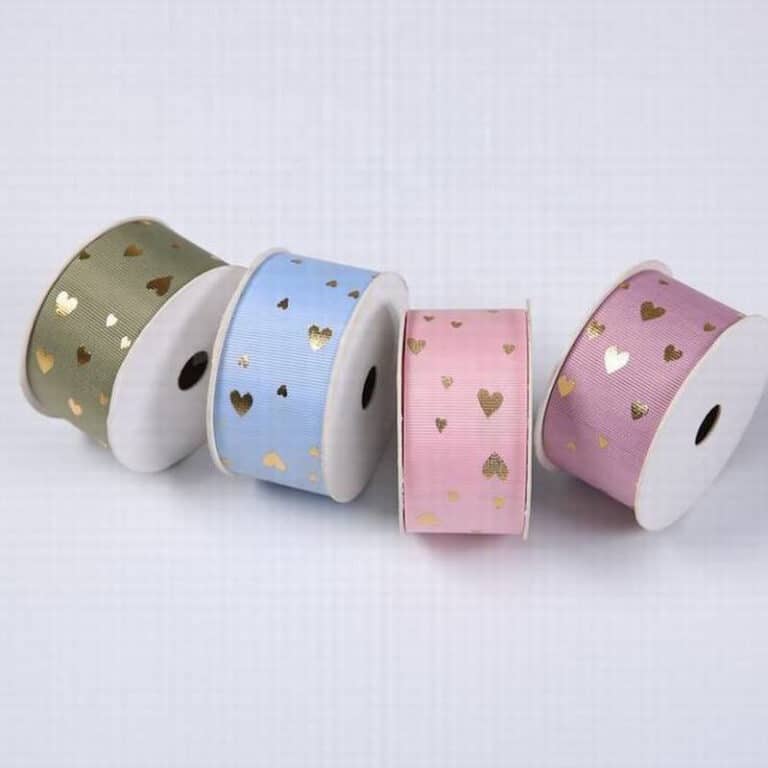
| Folio | Marcas metálicas sobre satén para programas de regalo y retail. | Adherencia después del plegado y el frotamiento, no solo en una muestra plana sobre la mesa. |
| Plastisol. | Marcas opacas sobre fondos oscuros. | Tacto y rigidez en toda el área impresa. |
| Relieve. | Marcas en relieve donde importa la presencia táctil. | Uniformidad de la altura a lo largo del rollo, no en un solo metro. |
| Silicona | Tacto suave, usos afines a la confección | Curado y residuo en la cara posterior |
| Tinta de purpurina | Líneas de temporada y festivas. | Suelta pelusa al manipularse; solicite una muestra frotada. |
| Placa gruesa. | Depósito espeso, alta opacidad. | Registro de las marcas de repetición a lo largo del material. |
La idoneidad del método depende del material, el diseño, el uso final y la ruta de producción, y se resuelve en la aprobación de muestras, no en el presupuesto. Pregunte cuáles de estos procesos realiza el proveedor en su propia planta. La lista es lo bastante corta como para que cualquiera que posea el equipo pueda responderla de inmediato.
La verificación clave en la fábrica es si el departamento de muestras puede producir una muestra de preproducción en el sustrato y el ancho exactos que usted ha especificado, en lugar de una muestra impresa en cualquier cinta que haya a mano. Una muestra aprobada y el registro de aprobación que indique material, ancho, referencia de color, método de impresión y versión del diseño son la referencia con la que se medirá la producción en serie. Sin ese registro no hay base para una reclamación posterior, porque no consta por escrito qué se suponía que debían ser las mercancías.
Pregunte cuándo empieza a correr el plazo.
La producción estándar de grandes volúmenes en MEEDEE Ribbon es de 2 a 4 semanas tras la aprobación de la muestra. Dos detalles de esa frase importan más que el número. Primero, el reloj empieza en la aprobación, no en la orden de compra, así que cualquier asunto sin resolver en su arte es su cronograma, no el de la fábrica. Segundo, los programas con impresión personalizada, teñido especial o que sean complejos en otros aspectos tardan más y deben confirmarse en la cotización en lugar de asumirse a partir de un rango estándar.
Un proveedor que cotiza un mismo plazo de entrega para cada programa está cotizando una política, no un plan. Pregunte qué partes de su pedido específico quedan fuera de la producción estándar y cuánto añade cada una.
4. Trate un solo número de MOQ como una señal de advertencia
No existe un mínimo global honesto para la cinta a medida, porque el mínimo lo fija la variable que resulte más cara de cambiar. En un programa a medida, la cantidad se confirma según el material, el ancho, el color, el método de impresión, la versión del arte, el embalaje, la cantidad por SKU y el calendario de pedidos. Cambie el número de colores y la cifra cambia. Reparta el mismo yardaje entre seis SKU y vuelve a cambiar.
Vale la pena insistir en esto, porque un mínimo publicado que nunca cambia suele significar que el proveedor está comprando productos terminados y revendiéndolos. Solicite el mínimo según su especificación real y pregunte qué variable lo está determinando. La respuesta le indica dónde negociar.
5. Lea los certificados por el alcance, no por los logotipos.
Los logotipos de certificados en una presentación de proveedor son casi irrelevantes sin su alcance. MEEDEE Ribbon cuenta con OEKO-TEX Standard 100, GRS, una auditoría Sedex SMETA e ISO 9001, y cada uno cubre un aspecto distinto y limitado:
- OEKO-TEX Standard 100 se mantiene en la Clase II (contacto con la piel). No es una afirmación general que abarque cada artículo del catálogo.
- GRS cubre únicamente las líneas de poliéster reciclado. Un certificado GRS no convierte una cinta de poliéster convencional en una reciclada, y preguntar al proveedor que confirme cuáles de sus SKU están dentro del alcance reciclado es una pregunta legítima.
- Sedex SMETA es una auditoría de cumplimiento social del sitio de Xiamen. Es una auditoría de las condiciones de trabajo, no una certificación de producto, y no dice nada sobre la cinta en sí.
- ISO 9001 Se trata de un certificado de sistema de gestión de calidad. Describe cómo la fábrica documenta y controla su proceso, no el rendimiento de ningún artículo en particular.
La solicitud útil no es el logotipo, sino el documento vigente con su alcance y vencimiento, leído del propio certificado y cotejado con las familias de productos que realmente compra. Cualquier proveedor puede enviar una foto de un distintivo. Pocos pueden enviar un alcance que cubra su pedido.
Qué poner en la RFQ.
Tres cotizaciones solo son comparables cuando responden a la misma especificación. Envíe lo siguiente y las diferencias que queden son reales:
- Material y ancho en milímetros, con la tolerancia que pueda aceptar
- Referencia de color y cómo se aprobará, sobre el sustrato real en lugar de una muestra virgen
- Arte al tamaño de impresión, con el método de impresión que considere necesario y una nota de que aceptará una contrapropuesta
- Cantidad por SKU y el número de SKUs, no solo un total.
- Requisitos de acondicionamiento, embalaje y etiquetado.
- La fecha en que necesita la mercancía en su almacén, para que el proveedor pueda trabajar hacia atrás hasta la aprobación de muestras.
Si todavía está preseleccionando, el Familias de cintas al por mayor la página muestra las nueve familias de cintas, y fabricación de cintas personalizadas cubre las vías de personalización y en qué punto cada una modifica el cronograma. Los compradores que lleven a cabo un programa de marca con su propia etiqueta deben comenzar desde Fabricación de cintas OEM y ODM, y la impresión de logotipos suele recaer en cintas grosgrain.
Obtenga una cotización según su especificación, no una lista estándar.
Envíenos el material, el ancho en milímetros, la referencia de color, el arte al tamaño de impresión, la cantidad por SKU, el embalaje y su fecha de entrada en almacén. Le comunicaremos el mínimo que resulte de esas variables, el plazo de entrega y el método de impresión que creemos que el arte necesita.
Conclusión
Ninguno de los cinco controles requiere visita a fábrica, y ninguno depende de confiar en una fotografía. Todo esto puede responderse por escrito antes de que envíe el arte: el rango de anchos, los métodos de impresión internos, cuándo empieza a correr el reloj de producción, si el mínimo varía según la especificación y qué cubre realmente cada certificado. Un proveedor que responde a los cinco desde su propia línea merece una prueba. Un proveedor que tiene que ir a preguntar es la parte adicional por la que tendrán que pasar sus revisiones durante el resto del programa.
Preguntas frecuentes
¿Es una empresa comercializadora siempre la elección equivocada?
No. Para pequeñas cantidades de cinta de existencias, en anchos y colores estándar, un intermediario con existencias en almacén puede ser más rápido y más barato que una tirada de fábrica. El desajuste aparece en el trabajo a medida, donde cada revisión del diseño tiene que pasar por un intermediario adicional y nadie en la cadena se hace responsable del resultado de impresión.
¿Cómo puedo verificar la dirección de una fábrica sin visitarla?
Solicite el informe de auditoría que respalda la afirmación de cumplimiento social y compare el emplazamiento que figura en él con la dirección indicada en la cotización y en la factura. Una auditoría a nivel de sitio identifica una instalación concreta, que es más difícil de presentar como propia que una fotografía de un edificio.
¿Qué debe incluir una primera muestra además de la cinta?
La especificación con la que se fabricó. Una muestra sin un registro escrito del material, el ancho, la referencia de color, el método de impresión y la versión del arte utilizado no puede usarse para juzgar la tirada de producción, porque no hay nada contra qué compararla.
Nota editorial
Preparado por el Equipo Editorial de MEEDEE Ribbon y revisado según la información actual de producto, personalización y abastecimiento proporcionada por Meedee Ribbon Inc. Los términos comerciales como MOQ, muestras y plazo de entrega deben confirmarse para cada especificación.