
 EN
EN  FR
FR  DE
DE  KO
KO  ES
ES  SV
SV  AR
AR  DA
DA  CS
CS  IT
IT  JA
JA  TR
TR  PT
PT  NL
NL  PL
PL  FI
FI A gift box ribbon bow is easier to source when the buyer defines the use case, proof required, sample decision, and quote inputs before supplier outreach.
For 10 ways to tie a ribbon for the perfect gift box bow, procurement should compare suppliers by the evidence behind the quote, not by a single unit price or a generic capability list.
Follow the 10 ways to tie a ribbon for the perfect gift box bow checks below to turn the request into a controlled sample approval and a comparable supplier response.
Direct answer: For 10 ways to tie a ribbon for the perfect gift box bow, the direct buying decision is whether the written specification, supplier proof, sample result, quotation assumptions, and approval owner describe the same order.
Use this article-specific five-check index after choosing a bow method. It separates a bow that looks good once from a bow that a team or supplier can reproduce, pack, and reorder consistently.
| BRI check | Pass condition | Evidence to retain | Hold condition |
|---|---|---|---|
| Proportion | Loop, tail, knot, and box proportions match the approved finished sample. | Annotated sample photo and finished dimensions. | The method depends on visual judgment with no reference dimensions. |
| Material recovery | The selected ribbon forms the intended loops and recovers after normal handling. | Material-specific tied sample and handling notes. | A loose swatch was approved without tying the chosen method. |
| Operator repeatability | Two trained operators can follow the same sequence and acceptance points. | Work instruction, step photos, and side-by-side samples. | Only one maker can reproduce the approved appearance. |
| Pack-out survival | The bow keeps shape and orientation in the approved unit and carton packing. | Packed sample after the agreed handling check. | Loops crush, tails twist, or bows tangle in packing. |
| Reorder control | Material code, width, color, cut length, method, sample ID, packing, and exceptions use one revision. | Signed specification and reorder record. | The previous bow cannot be traced to a controlled sample and specification. |
Decision rule: Score one point for each Pass. A five-point result is release-ready; any Hold requires revision and a new finished sample before bulk assembly or reorder.
Framework created for this guide by the MEEDEE Ribbon Editorial Team from the article's bow-method, material, sample, pack-out, and reorder evidence; it is not an industry standard.
Commercial Terms Note
MOQ, pricing, and lead times vary by specification. Each project requires individual feasibility review based on material, quantity, complexity, and timing. Confirm current terms via our RFQ form or email [email protected].
Copy this 10 ways to tie a ribbon for the perfect gift box bow approval record into the RFQ file. Keep every checked item on the same revision before releasing the order.
- ☐ Final specification and intended use
- ☐ Supplier feasibility and documented exceptions
- ☐ Sample or inspection evidence
- ☐ Commercial assumptions, owner, decision, and date
- 1 · DefineUse case and written specification
- 2 · ProveSupplier feasibility and sample evidence
- 3 · CompareCommercial assumptions and exceptions
- 4 · ReleaseDecision, owner, date, and revision
Move the 10 ways to tie a ribbon for the perfect gift box bow order forward only when each gate leaves written evidence for the next. Return an unresolved specification, sample, or quote exception to its owner before bulk production.
Gift-box bow methods at a glance
At this checkpoint, keep each gift box bow requirement beside its supplier proof and approval owner.
- Confirm ribbon specification against approved sample: Ribbon type, width, length, color code (Pantone/CMYK), bow style, and material data sheet reference Pre-production sample tied into intended bow style, material data sheet, and signed specification revision Unapproved material substitution or dimension drift causes bow collapse or visual mismatch; hold production until sample matches written spec Document approved sample identifier, artwork version, and deviations; attach signed sample reference to purchase order
- Verify supplier capability for repeatable bow production: Supplier's production lead time, MOQ per color, tooling fees, and sample approval timeline Quotation with cost per unit, MOQ, tooling, and production schedule; confirmation of ribbon lot consistency Supplier without documented ribbon lot control or sample-approval process may deliver inconsistent bows across reorders Request current MOQ, sample cost and timing, and trade terms for confirmed specification; compare against the standard 2–4 week production window after sample approval
- Validate lead time assumptions before production commitment: Required delivery date, order quantity, and any customization (print, color, packing) confirmed lead time including artwork review, sampling, material procurement, and shipping Unconfirmed lead time assumptions lead to missed deadlines; artwork revisions or material changes can extend schedule beyond the standard 2–4 weeks after sample approval Request current production timing for the confirmed specification; document any schedule risk in the purchase approval record
- Establish quality control checkpoint for bow consistency: Approved sample identifier, acceptable tolerance for bow dimensions, and pull-test criteria First-article bow for approval, inspection evidence (setup, in-process, pre-pack), and signed QC record Without documented QC checkpoints, bulk bows may vary in shape, size, or tie-off security; approve sample as complete order reference Define which characteristics are checked at setup, during production, and before packing; store QC evidence with purchase record
Document buyer follow-up for reorder control: Original approval record, sample identifier, and any changes to ribbon material, width, or bow design Confirmation that ribbon lot, artwork, and process match original approved sample; disclosure of any changes Reorders without sample check risk color or width drift; silent substitution of material or process invalidates approval Ask supplier to confirm no changes to ribbon, print, or packing before using previous order as production reference; request new sample if any deviation.
Materials, dimensions, and tools that change the result
Compare these materials, dimensions, and tools against one RFQ revision. Each row should identify the requirement, approval evidence, and buyer action before production.
| Specification | Quality control | Verification method | Risk to avoid | Buyer action |
|---|---|---|---|---|
| Material / substrate | Verify ribbon fiber, weave, and finish against approved material data sheet. | Compare production ribbon lot to physical sample and supplier's material specification. | Supplier substitutes lower-grade material without documented approval, causing bow collapse. | Request material data sheet and pre-production sample tied into intended bow style. |
| Sample approval | Approve sample as complete order reference, not as visual proof alone. | Confirm sample identifier, artwork version, date, and approved deviations on signed record. | Approving appearance without approving complete specification leads to color or width drift on reorders. | Approve sample and attach signed sample reference to purchase order. |
| Width or size tolerance | Document acceptable tolerance for each dimension against approved sample. | Measure production ribbon width with calibrated gauge and compare to approved tolerance range. | Dimensions not confirmed against the approved sample cause rework and missed deadlines. | Specify width tolerance in RFQ and confirm supplier can hold it. |
| Finish or color control | Match ribbon color, texture, and bow-forming behavior to approved reference. | Compare production ribbon lot against approved sample under controlled lighting conditions. | Color or finish drift between sample and bulk order leads to returns and cost overruns. | Request production sample matching approved standard before bulk production. |
| Packing format | Document packing instructions: each bow in separate poly bag to prevent tangling. | Inspect packed bows against approved pack-out specification during pre-shipment inspection. | Improper packing causes bow damage in transit, increasing return rates. | Confirm packing format in RFQ and approve pack-out sample before shipping. |
Read the rows as one approval sequence. Start with material / substrate because supplier substitutes lower-grade material without documented approval, causing bow collapse. Verify it by asking the supplier to compare production ribbon lot to physical sample and supplier's material specification.
Keep the 10 ways to tie a ribbon for the perfect gift box bow supplier response, marked sample, and approval owner under the same revision number. If any proof conflicts with the approved record, hold the quote, sample, or production release until the supplier explains the deviation in writing. Before closing the checkpoint, reconcile the latest drawing, sample, quotation, and approval comments, identify which record controls if they disagree, and document the resolution. Carry the signed materials table into the purchase order and production handoff so the same checks support quote comparison, sample approval, shipment release, and later reorders.
Material, construction, and end-use variables
Two variables decide the outcome: the ribbon's fiber content and weave structure determine how the bow holds shape, while the end-use environment dictates whether a wired edge or a stiff grosgrain is required. Compare satin, grosgrain, cotton, organza, velvet, and wired ribbon by their ability to maintain a defined loop under the expected handling and shipping conditions. Document the selected material against the buyer's approved sample before any production commitment.
Dimensions, finish, and handling constraints
Two variables decide the outcome: the ribbon's width and length directly affect the bow's scale and proportion on the gift box, while the finish—such as edge sealing or colorfastness—determines how the bow withstands handling and storage. Verify that the width tolerance, color code, and edge treatment match the approved sample. Confirm that the factory's ribbon lot passes a pull-test on the tie-off sequence before approving the sample as the complete order reference.
See custom ribbon solutions for how this step fits into the order.
RFQ checkpoint
Send the intended use, ribbon material and width, color or artwork reference, quantity, packing, and required date for feasibility review.
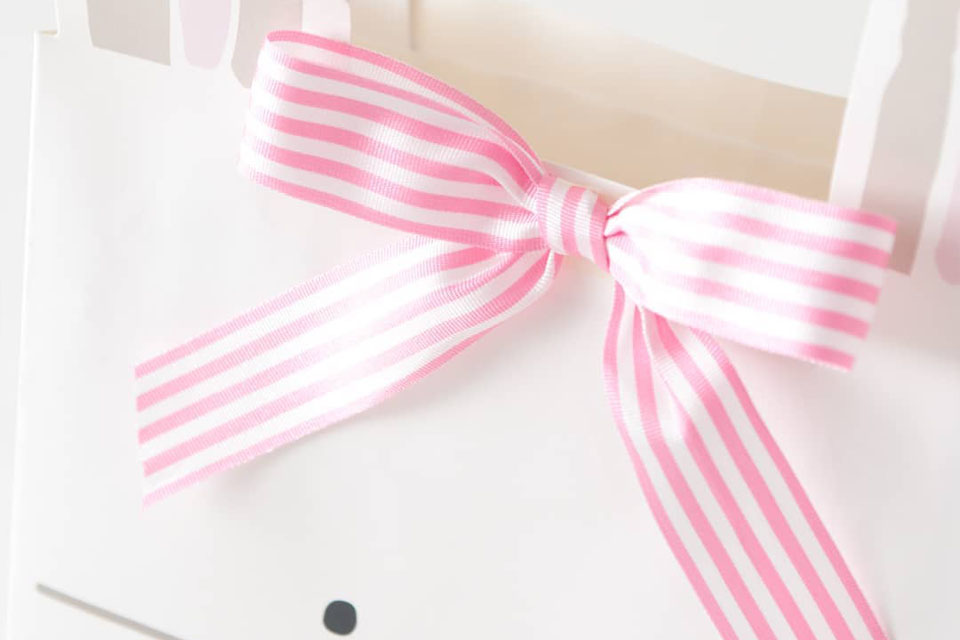
Step-by-step method and common failure points
At the process checkpoint, confirm that the ribbon type, width, and length match the buyer’s approved sample. The following ordered list outlines the step-by-step method for tying a bow, along with common failure points to avoid in factory execution.
- Cut ribbon to length : Use the buyer's verified length from the RFQ-confirmed requirement. Failure point: Cutting without a verified sample leads to waste and rework.
- Form the first loop : Hold the ribbon at the center and create a loop of consistent size. Failure point: Uneven loops cause asymmetry, increasing rejection risk.
- Wrap the second loop : Cross the ribbon over and pull through to form a second loop. Failure point: Loose tension results in a floppy bow that fails quality checks.
- Tighten and adjust : Pull both loops evenly to secure the knot. Failure point: Overtightening can damage the ribbon, especially on satin finishes.
Trim tails : Cut tails at a 45-degree angle for a clean finish. Failure point: Uncut tails or uneven lengths detract from the premium look required by buyers.
Common failure points include working from dimensions that no approved sample or RFQ confirms. Instead, rely on buyer verification questions during RFQ handoff to confirm exact specifications. The table below summarizes key production risks and their mitigation.
| Production Risk | Mitigation |
|---|---|
| Ribbon width mismatch | Confirm width against approved sample before cutting |
| Color deviation | Use Pantone or CMYK code from buyer’s RFQ |
| Bow size inconsistency | Create a jig based on the verified sample |
| Material waste | Set MOQ per RFQ-confirmed requirement |
After the bow is tied, hand off the sample to the buyer for approval before mass production. This ensures the method is repeatable and aligns with cost and quality expectations.
See ribbon products for how this step fits into the order.
How to turn the method into a repeatable work instruction
For the current specification checkpoint in 10 ways to tie a ribbon for the perfect gift box bow, keep the supplier response, marked sample, approved specification, quotation, and approval owner under the same revision number. If the evidence conflicts with the approved record, hold the quote, sample, or production release until the deviation is explained in writing. Carry the signed decision record into the purchase order, production handoff, shipment release, and later reorder review so every team works from the same baseline.
See OEM and ODM ribbon development for how this step fits into the order.
Make in-house, outsource assembly, or order a finished component
When a ribbon specification is unclear—such as missing the exact ribbon width or bow loop count—the factory may quote based on a standard that doesn’t match your intended design. This can lead to cost overruns, rejected samples, and delayed production. To avoid this, confirm the ribbon type, width, and length against the buyer’s approved sample before any quote or order is placed.
Approval evidence and acceptable sample limits
Require the factory to provide a signed approval record for the first article, including measured dimensions and a photo of the bow tied per your method. Define acceptable sample limits in the RFQ, such as a maximum deviation of the buyer-approved tolerance on ribbon width or loop size. This ensures both parties agree on what constitutes a pass.
Bulk consistency, packing, and reorder controls
For bulk production, ask the factory to submit a packing plan that shows how bows are nested or separated to prevent crushing. Include a reorder control step: verify that the same ribbon lot, dye batch, and tying fixture are used. If the ribbon color or texture shifts, request a new approval sample before the next order.
The RFQ should also cover sample approval: What is the measured ribbon width and loop length on the approved sample?; Bulk consistency: How will you ensure the same ribbon lot and tying method for every production run?; Packing and reorder: Can you provide a packing diagram and confirm reorder uses the same dye batch?.
By documenting these controls in the RFQ and sample handoff, you reduce the risk of mismatched bows and costly rework. For more details, see our MEEDEE Ribbon factory.
Sample approval, defect checks, and packing
At the sample approval, defect checks, and packing checkpoint, the record needed before the next stage is a signed-off production sample, a documented defect criteria, and a packing specification. The following ordered list outlines the key steps to achieve this.
- Verify ribbon specifications—width, length, and Pantone color code—against the approved sample. Any deviation in width or color can lead to rework costs and delayed production. Verify the MOQ aligns with your order quantity to avoid unexpected cost overruns and production delays.
- Conduct defect checks: inspect for frayed edges, uneven bow loops, color bleeding, and consistent ribbon luster. Use a standardized checklist to ensure factory execution meets quality standards. Document any defects found and agree on acceptable thresholds.
- Define packing requirements: specify that each bow is individually wrapped or layered with tissue paper to prevent crushing during transit. Include a packing slip that matches the order quantity. Confirm the packing method with the factory to avoid damage.
- Document the RFQ-to-sample handoff process: ensure that the sample request includes all spec details, and the supplier provides a sample approval form with signatures. This reduces production risk from miscommunication and ensures timely sample delivery.
Establish a sign-off protocol: before bulk production, the buyer must approve the sample and defect criteria. This step locks in the cost and prevents last-minute changes. The signed sample becomes the benchmark for production.
What to include in a commercial ribbon inquiry
When a ribbon specification is unclear—such as missing the exact ribbon width or bow loop count—the factory may quote based on assumptions, leading to cost and production mismatches. The decision rule is: include all critical specs upfront to lock in accurate pricing and avoid rework.
Define the requirement and success criteria
State the ribbon type (e.g., satin), width, length per bow, color code (Pantone or CMYK), and bow style (e.g., 6-loop). Success criteria include consistent loop size, no fraying, and colorfastness. This prevents ambiguity.
Confirm execution details with the factory
Verify the factory’s ability to produce the specified ribbon width and bow style. Discuss production risk: for example, narrow ribbons may cause uneven loops. Request a sample of the ribbon material before bow assembly to confirm texture and dye match.
Approve samples and control reorder risk
Review the sample against the approved product, checking dimensions, color, and bow construction. For reorders, confirm the same ribbon lot or dye batch to avoid color variation. Document the approval in writing to ensure repeatable quality.
Source check: ISO 2859-1 sampling inspection standard. Use this source as context, then record the project-specific acceptance rule, evidence owner, and approval step in the RFQ or quality file.
- Decision matrix: choose the 10 ways to tie a ribbon route only after product fit, customization scope, quote assumptions, sample approval, and reorder control are comparable.
- Best-for check: match the 10 ways to tie a ribbon route to the use case and approved specification before comparing price.
- Trade-off check: compare buyer control, development scope, cost drivers, lead-time assumptions, quality risk, and repeat-order consistency.
In conclusion
The practical decision for sourcing gift box bows is to verify that the ribbon type, width, length, color code, and bow style are documented against a buyer-approved sample before any production commitment. Shortlist a supplier who can provide a material data sheet and a pre-production sample tied into the intended bow style, and compare options by requesting a quote that breaks down cost per unit, MOQ per color, and tooling fees. Validate the spec by confirming that the factory’s ribbon lot matches the approved sample and that the tie-off sequence passes a pull-test, then approve a sample as the complete order reference to prevent color or width drift on reorders.
To request a quote, visit ribbon bows and confirm the final specification, quote assumptions, sample approval, QC evidence, approval risk, and supplier follow-up before bulk order.
Frequently asked questions
What specification should a buyer confirm for 10 ways to tie a ribbon?
The buyer should confirm the ribbon type, width, length, color code (Pantone or CMYK), and bow style against the intended design. Request a quote that breaks down cost per unit, MOQ per color, and tooling fees, and include a material data sheet and a pre-production sample tied into the intended bow style before mass production.
What should be checked on a 10 ways to tie a ribbon sample?
Verify that the ribbon type, width, and length match the buyer’s approved sample, and that the ribbon’s color, texture, and bow-forming behavior are consistent. The factory must submit a first-article bow for approval before bulk production, and the buyer should confirm the sample identifier, artwork version, date, and any approved deviations.
When should a business make, outsource, or order 10 ways to tie a ribbon?
A business should order from a supplier when the ribbon type, width, and length are confirmed against the buyer’s approved sample, and the factory can provide a quote with cost per unit, MOQ per color, and tooling fees. For custom designs, use OEM or ODM ribbon development to review feasibility, and request a production sample matching the approved standard before reordering to avoid color or width drift.
What should buyers verify before approving 10 ways to tie a ribbon?
Buyers should verify that the ribbon material, width, length, and bow style match the approved sample, and that the factory has documented the approved specification revision with a signed sample reference. Confirm that the quote, artwork version, signed sample, and packing record all describe the same order, and that any changes to ribbon material, width, or process trigger a documented review.
Key facts: 20+ years of OEM and ODM ribbon manufacturing | Xiamen, China | 9 ribbon families | 3–100 mm widths | OEKO-TEX Standard 100, GRS and ISO 9001 certifications plus a Sedex SMETA audit
Related Resources
- Custom Ribbon Manufacturing Services — Pantone color matching, width customization, printing methods
- OEM & ODM Development Workflow — From requirement review to production
- Factory Tour & Capabilities — Xiamen facility overview
- Quality & Certifications — Oeko-Tex, GRS, ISO 9001; Sedex SMETA audit
- Request Quote Today — Share material, width, color and quantity for a quotation
Editorial note
Prepared by the MEEDEE Ribbon Editorial Team and reviewed against current product, customization and sourcing information supplied by Meedee Ribbon Inc. Commercial terms such as MOQ, sampling and lead time should be confirmed for each specification.