 EN
EN  FR
FR  DE
DE  KO
KO  ES
ES  SV
SV  AR
AR  DA
DA  CS
CS  IT
IT  JA
JA  TR
TR  PT
PT  NL
NL  PL
PL  FI
FI Cotton ribbons: product selection needs a written specification before the buyer can decide whether Cotton Ribbons: Product Selection Checklist fits the use case, specs, MOQ, sample approval path, and supplier quote process; otherwise suppliers may quote different product and approval assumptions.
Cotton is picked for texture and the natural look, then judged on how cleanly it takes print. Those two pull in opposite directions.
Direct answer: Use cotton ribbons: product selection only after its specification, application fit, sample route, quantity rule, and supplier exceptions have been confirmed in writing.
Put Cotton Ribbon Specs, MOQ, and Pricing Basis in Writing
| Requirement | Factory control | Evidence to verify | Order risk | RFQ follow-up |
|---|---|---|---|---|
| Sample approval | Maintain retained counter-sample, artwork file, shade reference, and signed approval record | Sample-approve physical ribbon against artwork, measurement notes, and packing requirement | Production proceeds against assumptions, causing disputes during incoming inspection | Ask for pre-production sample and approve deviations in the RFQ file |
| MOQ and order quantity | Plan batch allocation by SKU, width, color, print, and packing format | Compare quotation quantity breaks with approved SKU list and delivery schedule | Understated quantities can trigger surcharges, shade splits, or delayed consolidation | Request RFQ pricing by SKU and confirm negotiable order conditions |
| Material / substrate | Confirm cotton composition, yarn count, weave type, handfeel, and edge construction | Inspect sample label, burn-test if appropriate, and compare weave under magnification | Wrong substrate changes print absorption, shrinkage, drape, and compliance positioning | Ask supplier to document substrate specification before shortlist approval |
| Width or size tolerance | Set allowable width variance, roll length rules, and cutting method controls | Measure multiple roll positions with calibrated ruler before sample signoff | Uncontrolled tolerance disrupts sewing, packaging fit, or automated application lines | Request tolerance statement and approve measurement method in written RFQ |
| Finish or color control | Control dye lot, washing finish, print curing, and edge appearance standards | Compare sample under agreed light source against approved color reference | Color drift creates mixed-lot rejection, brand mismatch, and reorder inconsistency | Ask for lab dip, strike-off, or bulk shade approval process |
The comparison turns on construction, customization route, tolerance discipline, and order economics because cotton ribbon decisions often look similar until the factory converts them into purchasable specifications. Approval should create a shared buying record that separates confirmed product intent from items still priced or engineered by the supplier. Treat any verbal offer as provisional until commercial numbers, packing assumptions, and schedule implications are confirmed in the written RFQ.
Once the requirement is defined, the buyer can decide whether to shortlist, request revised samples, or hold the project for clarification. The practical approval consequence is risk transfer: the supplier is being asked to manufacture against documented acceptance criteria, while the buyer accepts the stated sourcing constraints. Before purchase order release, confirm price basis, order quantity, packing cost, artwork charges, and timing in the written RFQ.
Cotton Ribbon Choices for Repeats, Texture, Branding, or Tight Schedules
| Option | Best fit | Trade-off | Risk to avoid | Verification | Follow-up |
|---|---|---|---|---|---|
| Approved cotton twill ribbon repeat | Use when current width, shade, and hand-feel already pass sampling | Lowest change burden, but no improvement to print contrast or drape | Reordering by name only may shift weave density or edge finish | Compare retained sample against bulk preproduction cutting from the same loom | Approve only after shade, width, and roll finish match the file |
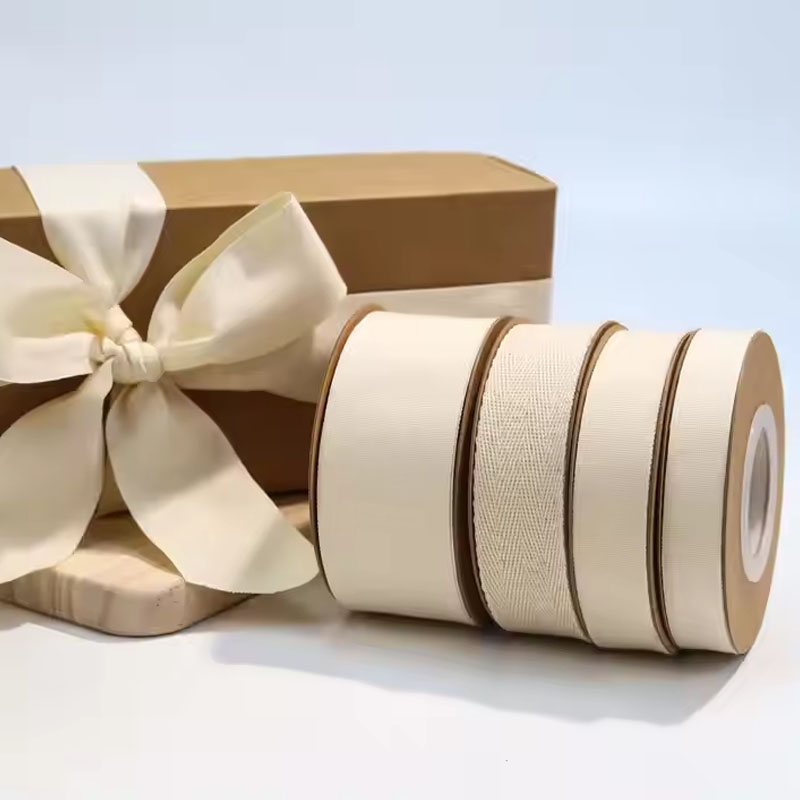
| Cotton herringbone ribbon as a texture alternative | Shortlist when packaging needs visible texture without changing natural cotton content | Texture may soften small logos and raises trimming control requirements | Unchecked ribs can cause skewed cuts, uneven bows, or print distortion | Check weave repeat, edge straightness, and artwork proof on actual tape | Send target use, logo size, and acceptable rib direction for sampling |
| Custom printed cotton ribbon via custom ribbon manufacturing route | Use when brand color, message, or campaign version must be controlled | Artwork, ink behavior, and shade matching add approval gates before bulk | Skipping printed proofs can release wrong colors or poor cotton absorption | Review print proof, rub check notes, and marked shade standard together | Freeze artwork version and packing copy before authorizing production setup |
| Stock undyed cotton ribbon for schedule protection | Select when decoration can accept neutral tone and standard width availability | Less brand-specific, but fewer dye and artwork approval dependencies | Assuming stock equivalence may miss roll length, edge, or shrink behavior | Inspect warehouse roll label, width tolerance, edge finish, and shade lot | Reserve only after receiving current stock photos and sample cutting |
For approved cotton twill ribbon repeat, a poor decision can mean reordering by name only may shift weave density or edge finish. Ask the supplier to compare retained sample against bulk preproduction cutting from the same loom.
Preserve the approved cotton twill ribbon repeat decision under one revision number: keep the supplier response, marked sample, approved specification, quotation, and approval owner together. If the evidence conflicts with the approved record, hold the quote, sample, or production release until the deviation is explained in writing. Once the buyer and designated technical authority have accepted the evidence, carry the signed approval record into the purchase order, production handoff, shipment release, and later reorder review so every team works from the same baseline.
Assemble the Cotton Ribbon Proof Pack Before Costing Is Final
Start with the proof pack: a sample card, print artwork file, and written quote request notes that identify the cotton ribbon use, finishing method, packing expectation, and acceptance questions. For wholesale ribbon families cotton ribbons, the supplier’s answer should make each approval point traceable before costing is treated as final.
- Confirm the ribbon is specified as cotton textile ribbon, including hand feel, color target, edge style, and any custom printed requirement.
- Ask which item is quoted as stock, made-to-order, or custom ribbon, then request the quote request-confirmed cost basis and MOQ rather than assuming a standard quantity.
- Check production risk by asking how color, shrinkage, fraying, print registration, and roll-to-roll variation will be reviewed on the sample.
- Verify factory execution: who checks incoming yarn or tape, printing setup, finishing, rewinding, and packing against the approved sample.
- Send the approved sample reference, artwork version, packaging note, and change-control questions with the purchase order handoff.
MEEDEE Ribbon’s B2B sourcing, customization, and sampling guidance can support this review when buyers compare cotton ribbon specifications and custom ribbon options.
A Shared Cotton Ribbon File for Quotes, Samples, and Reorders
At the supplier-shortlist checkpoint, the output must be a shared approval file: quote request notes, supplier proof, signed sample comments, and reorder rules before any bulk release.
Supplier evidence to request
Ask the factory to confirm cotton ribbon construction, weave, edge finish, color method, print or branding route, packing preference, pricing basis, and MOQ in writing. For custom ribbon work, include artwork ownership, file format, and whether any requested quality or material compliance documents can be supplied for the intended market.
| Check | Buyer question | Record to keep |
|---|---|---|
| Specification | Does the quoted ribbon match the RFQ use, touch, color, and branding method? | Approved spec sheet |
| Commercials | What price basis, MOQ, tooling, and packing costs are confirmed? | Supplier quotation |
| Execution | What risks could affect shade, shrinkage, print clarity, or repeat production? | Factory comments |
Sample approval evidence
Compare the sample against the quote request, not memory. Note accepted deviations, rejected features, and required corrections before the supplier prepares bulk materials or branded trims.
Reorder control records
For repeat orders, keep the approved sample, artwork, color reference, packing note, and supplier response together. If the buyer needs OEM or ODM customization support, route the next quote request through OEM and ODM ribbon manufacturing with the same approval file attached.
Process Ownership, Sample Labels, and Start Dates for Cotton Ribbon Quotes
- Which cotton ribbon steps does the MEEDEE ribbon factory control before subcontracting starts? Owned weaving, dyeing, printing, or packing affects accountability during approval. Supplier names controlled steps, outside processes, and inspection owner in writing. Hidden subcontracting creates shade, hand-feel, or packing disputes after sampling. Shortlist only after process ownership is written into the quote request file.
- What physical proof will match the quoted cotton ribbon version? Comparable approvals need the same yarn, finish, print, and packing basis. Supplier sends a labeled sample card tied to quotation revision. Approving a loose sample can mask production-version changes. Check sample labels against artwork, color standard, and packing request.
- Which product document, management-system certificate or social-audit report applies to this cotton order? Request the listed article, material, factory site and applicable scope separately. Keep the verified documents with the quotation and sample approval record.
- When does bulk production start after sample approval is recorded? MEEDEE lists standard production as 2–4 weeks after approval. Quotation states approval trigger and flags custom printing or dyeing exceptions. Unclear start date causes missed launch windows and rushed release decisions. Record approval date, then reconfirm schedule in the final quotation.
References: ISO 2859-1 sampling inspection standard.
In conclusion
The final approval for your cotton ribbon supplier comes down to verifying that every checklist point—from width tolerance and colorfastness to MOQ terms and lead time—matches your production spec before you sign off. Compare the physical sample against your documented requirements, confirm the cost structure and minimum order conditions per SKU, and ensure the supplier can provide third-party certification or a factory audit report. Once you have validated the spec, documented the quality benchmarks, and agreed on reorder triggers, you are ready to shortlist a supplier and proceed to the quote request and sample handoff with confidence.
To shortlist a supplier for cotton ribbons product, use cotton ribbons to confirm the final specification, quote assumptions, sample approval, QC evidence, approval risk, and supplier follow-up before bulk order.
Frequently Asked Questions
How should a b2b buyer choose product type?
For cotton ribbons: product selection checklist, turn the answer into a written quote request note: intended use, the governing dimensions, material, finish, packing method, and approval owner. Ask the supplier what sample proof or QC record will confirm the same result in production. A vague answer can turn into quote mismatch, sample delay, packing damage, or repeat-order drift.
Which supplier proof should buyers request for cotton ribbons?
Request a physical sample that matches your spec sheet exactly, then measure width tolerance, thread count, and color against a Pantone reference. Document the sample approval with a signed-off record that includes the agreed width, weight, color code, and any printing registration marks. Verify supplier risk by asking for a factory audit report or third-party certification (e.g., OEKO-TEX) and check that the sample’s QC pass rate meets your threshold. After sample approval, confirm the minimum order and lead time in writing before moving to production.
What should buyers lock before approving product selection checklist?
Before approving the product selection checklist, lock the final specification document that includes width tolerance, color standard, weave type, and any printing or finishing details. Verify that the supplier has confirmed the minimum order per SKU and the lead time for your order volume, and that you have a signed sample approval record. Also confirm the reorder trigger—such as a 30-day supply threshold—and agree on QC checkpoints (e.g., in-process inspection or final random sampling). Document all terms in the quote request or contract to avoid deviations later.
quote request handoff: Send Specs for Review.
Editorial note
Prepared by the MEEDEE Ribbon Editorial Team and reviewed against current product, customization and sourcing information supplied by Meedee Ribbon Inc. Commercial terms such as MOQ, sampling and lead time should be confirmed for each specification.