
 EN
EN  FR
FR  DE
DE  KO
KO  ES
ES  SV
SV  AR
AR  DA
DA  CS
CS  IT
IT  JA
JA  TR
TR  PT
PT  NL
NL  PL
PL  FI
FI A tablecloth can shift because the cloth, table surface, overhang, airflow, guest contact, or fixing method is mismatched; one solution does not suit every venue.
This guide compares temporary and reusable setup methods, then shows event teams how to turn the approved method into a repeatable setup and supply record.
You will get a direct method comparison, a venue safety check, and a GRIP setup record for repeat events.
Direct answer: Start by reducing excessive overhang and aligning the cloth, then test a non-slip underlay, table clips, removable fasteners, weights, or designed ties according to the table edge, surface rules, wind, guest contact, and required appearance. Confirm venue permission and test for marks before the event.
Copy this how to keep tablecloths from sliding approval record into the RFQ file. Keep every checked item on the same revision before releasing the order.
- ☐ Final specification and intended use
- ☐ Supplier feasibility and documented exceptions
- ☐ Sample or inspection evidence
- ☐ Commercial assumptions, owner, decision, and date
- 1 · DefineUse case and written specification
- 2 · ProveSupplier feasibility and sample evidence
- 3 · CompareCommercial assumptions and exceptions
- 4 · ReleaseDecision, owner, date, and revision
Move the how to keep tablecloths from sliding order forward only when each gate leaves written evidence for the next. Return an unresolved specification, sample, or quote exception to its owner before bulk production.
How to keep tablecloths from sliding
The simplest fix is to increase friction under the cloth or secure the cloth to the table. A non-slip shelf liner works well on smooth indoor tables; fitted covers, clips, elastic ties, weights, or discreet grip tape are better when wind, traffic, or an unusual table shape can pull the cloth. Test the chosen method on the actual table finish first so it does not leave residue or marks.
For repeatable venue setup, our editorial check uses the GRIP method: Ground surface, Risk and movement, Interface material, and Proof before rollout. We evaluate the table surface and cloth together because a method that holds heavy linen on sealed wood may fail with light polyester on glass.
- Ground surface: record whether the top is glass, sealed wood, laminate, metal, plastic, or an outdoor surface. Check venue rules before using adhesive.
- Risk and movement: note wind, guest traffic, long drops, service access, children, cables, and cleaning requirements.
- Interface material: shortlist liner, clips, ties, weights, fitted construction, or removable grip products that suit both surfaces.
- Proof: run a dry setup with the actual cloth, table, attachments, and expected loading period; photograph the result and record any shift, residue, edge damage, or setup delay.
For one-off use, choose the least invasive method that passes the dry setup. For recurring events or bulk purchasing, convert the passing setup into a written instruction with table size, cloth material, attachment placement, care limits, packing method, and a named approval owner.
Compare non-slip methods and limits
Compare non-slip methods and limits against one RFQ revision. Each row should identify the requirement, approval evidence, and buyer action before production.
| Specification | Quality control | Verification method | Risk to avoid | Buyer action |
|---|---|---|---|---|
| Sample approval | Pre-production sample matching approved spec, defect limits per ISO 2859-1 | Compare sample against written spec; measure grip retention under 8-hour simulated load | Inconsistent adhesion or grip across batches; rework or event-day failure | Request cut sample of liner or grip tape; approve sample before bulk production |
| Material / substrate | PVC or polyurethane mesh liner; confirm thickness, breathability, and washability | Request supplier material data sheet; verify MOQ and cut dimensions during RFQ | Non-breathable liner traps moisture against table finish; liner shifts if cloth is light | Specify liner material and thickness in RFQ; confirm supplier sourcing plan |
| Finish or color control | Color match to approved standard; no visible defects or edge fraying | Visual inspection under buyer-approved viewing conditions; compare to Pantone or approved color chip | Color mismatch affects event branding; edge fraying reduces liner lifespan | Request color sample; approve finish and edge quality before production |
| Packing format | Interleaving paper to protect non-slip surface; per unit or bulk pack | Inspect packing trial sample; confirm packing protects grip layer during transit | Surface damage during shipping reduces grip; incorrect pack count delays setup | Specify packing format in RFQ; request packing sample for approval |
Keep the how to keep tablecloths from sliding supplier response, marked sample, and approval owner under the same revision number. If any proof conflicts with the approved record, hold the quote, sample, or production release until the supplier explains the deviation in writing. Before closing the checkpoint, reconcile the latest drawing, sample, quotation, and approval comments, identify which record controls if they disagree, and document the resolution. Carry the signed Compare non-slip methods and limits table into the purchase order and production handoff so the same checks support quote comparison, sample approval, shipment release, and later reorders.
Before comparing suppliers, review OEM and ODM ribbon development for the related product or solution route.
RFQ checkpoint
Send the intended use, ribbon material and width, color or artwork reference, quantity, packing, and required date for feasibility review.
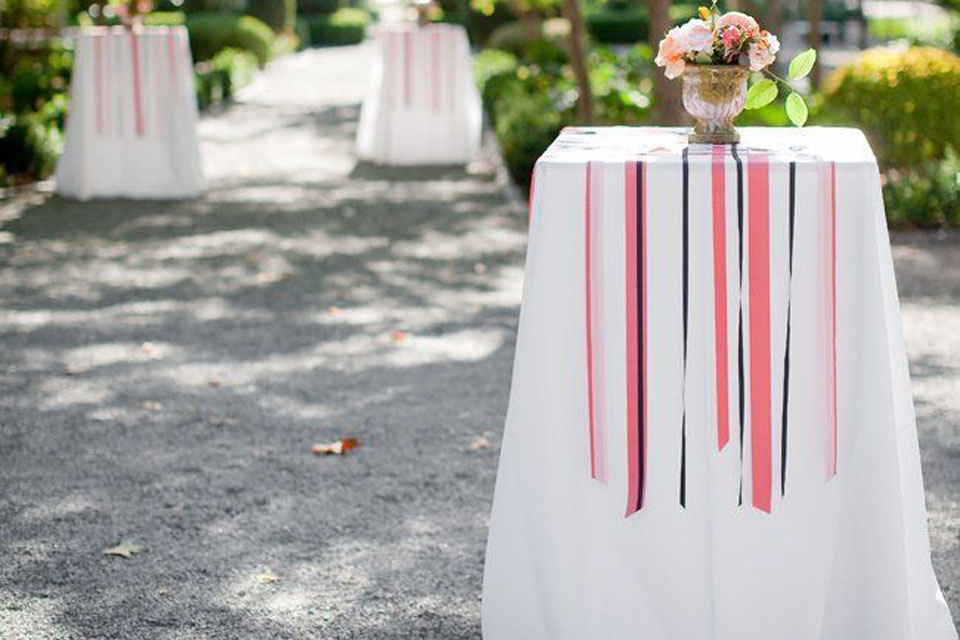
Match the method to the table, cloth, and venue
At this checkpoint, document a method specification that ties the non-slip solution to the table surface, cloth weight, and venue conditions. This prevents mismatched materials that cause slippage or damage.
To select the right method, follow this ordered list of evaluation steps:
- Identify table surface – Glass, wood, or outdoor tables each require different grip mechanisms. For example, silicone grippers work on glass but may not adhere to textured wood.
- Assess cloth weight and size – Lightweight polyester cloths need stronger grip than heavy linen. Verify the cloth drop length to ensure the method covers the full edge.
- Check venue conditions – Outdoor events with wind or high-traffic indoor setups demand higher friction solutions. Confirm with the buyer whether the venue is indoor or outdoor.
- Select non-slip material – Options include silicone strips, rubberized mesh, or adhesive tapes. Request a sample from the supplier to test adhesion on the actual table surface.
Document the specification – Record the table dimensions, cloth material, non-slip method, and venue type in the RFQ. This ensures the factory can replicate the setup consistently.
After matching the method, verify the supplier’s execution by asking: “Can you provide a sample of the non-slip material applied to the specified table surface for approval before production?” This step reduces risk of slippage during events.
For decorative ribbon ties or clips, review custom ribbon solutions as an alternative to standard tapes.
Create a repeatable event setup instruction
| Option | Best fit | Trade-off | Risk to avoid | Verification | Follow-up |
|---|---|---|---|---|---|
| PVC non-slip liner, cut to table dimensions | Venues with smooth table surfaces and standard cloth weights up to 180 gsm | Lower material cost per event but requires manual cutting and disposal after each use | Liner shifts under lightweight cloth or traps moisture, causing cloth damage or mildew | Obtain a cut sample and measure grip retention after 8-hour simulated load; confirm liner thickness and washability per venue contract | Approve liner specification and sample before bulk production; confirm MOQ and cut dimensions with supplier during RFQ |
| Polyurethane mesh liner, reusable and washable | High-use venues requiring repeated setups and consistent grip across multiple events | Higher upfront unit cost but eliminates per-event liner waste and cutting labor | Mesh may lose grip after repeated washes or trap debris, reducing effectiveness | Test grip retention after five wash cycles per supplier care instructions; compare against approved sample | Document wash cycle limit and replacement schedule in setup instruction; approve sample before reorder |
| Silicone grip tape strips applied to table edge | Custom table shapes or surfaces where full liner is impractical or cost-prohibitive | Lower material volume but requires precise placement and may leave residue on table surface | Adhesive fails under heat or humidity, causing cloth to slide during event; residue removal damages venue table finish | Collect a sample strip applied to the actual table surface material; test adhesion under 8-hour simulated event conditions | Confirm adhesive type and removal method with supplier; approve sample and document placement diagram in setup instruction |
| Satin ribbon with silicone grip dots, sewn or clipped to cloth edge | Decorative events where visible non-slip solution must match tablecloth aesthetic | Higher material and labor cost per cloth but provides integrated grip without separate liner | Grip dots detach after washing or clip damages cloth edge, requiring cloth replacement | The buyer should request a pre-production sample with grip dots applied to specified fabric; test grip retention and edge finish after wash cycle | Approve sample and store signed-off sample as baseline for reorders; confirm MOQ and lead time with supplier |
See quality and certifications for company-level context.
Choose in-house setup or supplied components
When specs are unclear, quotes can vary wildly, and approval records may be missing—leading to costly rework or event-day failures. For how to keep tablecloths from sliding, the first decision is whether your team will apply non-slip methods in-house or order components pre-attached by the supplier. Each path has distinct production risks and cost implications.
Approval evidence and acceptable sample limits
Before bulk production, request a pre-production sample (PPS) that matches your approved product, customization, and quality standards. Use ISO 2859-1 sampling inspection to set acceptable limits—agreed with the supplier for major and minor defects. This step locks in the non-slip method (e.g., silicone dots, gripper strips) and prevents surprises at delivery.
Bulk consistency, packing, and reorder controls
Once the sample is approved, the factory executes bulk production with consistent application of the chosen method. Packing must protect the non-slip surface (e.g., interleaving paper). For reorders, maintain a documented spec sheet and retain a sealed sample to ensure repeatability. RFQ and sample handoff should include clear pass/fail criteria and a sign-off form.
Test stability, safety, and appearance
Before setup day, document an event setup protocol validated against the actual table surface and conditions. The following ordered list outlines the factory execution steps for verifying non-slip performance.
- Specs check: Confirm tablecloth dimensions (e.g., drop length, surface area) and material type (e.g., polyester, linen) against the event table geometry. Match the non-slip method (liner, grip tape, or silicone dots) to the table surface finish (wood, glass, or outdoor).
- Cost and MOQ review: Compare the total cost of the non-slip solution per unit, including material and labor, against the budget. Ensure the MOQ aligns with the order quantity and that sample pricing covers one full table setup for validation.
- Production risk assessment: Evaluate risks such as adhesive residue on table surfaces, fabric damage from grip tapes, or liner slippage under high humidity. Document any known issues from past production runs and request mitigation measures from the factory.
- Factory execution test: Have the factory assemble a full table setup using the specified non-slip method. Simulate real-world conditions: place tableware, apply moderate pulling force, and check for cloth movement. Measure appearance under event lighting for color consistency and wrinkle-free finish.
RFQ and sample handoff: Record the tested configuration (method, material, dimensions) in the RFQ revision. Hand off a signed-off sample to quality control for batch approval, ensuring the production order references the validated setup.
This structured test sequence mitigates slippage risks and ensures the tablecloth appearance meets client expectations. The checklist serves as a repeatable decision scope for future events.
Prepare quote-ready setup and ribbon inputs
For recurring venue setups, the RFQ should describe the complete system rather than asking for a generic non-slip product. Send table dimensions and surface, cloth construction and drop, selected GRIP method, quantity, destination, care requirements, packing format, and required date. Ask the supplier to identify what is included, what requires a custom sample, and which assumptions could change price or timing.
Define the requirement and success criteria
The example below is illustrative, not a customer test result. It shows the level of evidence an event team should create during its own dry setup.
| Record field | Illustrative entry | Release rule |
|---|---|---|
| Setup | Round laminate table; lightweight polyester cloth; washable mesh liner | Exact table and cloth identified |
| Dry-run observation | No visible movement during the team’s agreed loading period; no residue after removal | Buyer records its actual result and test duration |
| Exceptions | Outdoor wind not covered; adhesive not approved by venue | Uncovered risks require a separate method test |
| Evidence | Before-and-after photographs, placement diagram, sample ID and reviewer name | All files share one revision number |
| Decision | Approve, revise, or hold | Named owner signs before rollout or order |
Confirm execution details with the factory
If ribbon ties, grip-backed ribbon, fitted edges, or other custom parts are required, ask how material, attachment, color, length, edge finish, and packing will be controlled. Request a pre-production sample made to the same specification and use the approved sample as the reorder baseline.
Approve samples and control reorder risk
Attach the signed approval record, marked sample, current quotation, and packing instruction to the purchase order. If the supplier changes a material, attachment process, finish, or packing method, return that change to sample approval instead of accepting a verbal substitution.
- Decision matrix: choose the how to keep tablecloths from sliding route only after product fit, customization scope, quote assumptions, sample approval, and reorder control are comparable.
- Best-for check: match the how to keep tablecloths from sliding route to the use case and approved specification before comparing price.
- Trade-off check: compare buyer control, development scope, cost drivers, lead-time assumptions, quality risk, and repeat-order consistency.
In conclusion
For how to keep tablecloths from sliding, the next procurement action is a written RFQ and sample approval record, not only a preferred style or unit price. Confirm the specification, MOQ assumption, artwork version, supplier capability, sample approval method, QC checkpoint, approval risk, and quote follow-up before bulk production.
If any material, structure, logo, finish, packing detail, or supplier proof changes, ask the supplier to update the quote and sample record before approving production.
Frequently asked questions
What is the easiest way to keep a tablecloth from sliding?
The easiest way to keep a tablecloth from sliding is to use a non-slip liner or grip tape. Specify the liner material (e.g., PVC or polyurethane mesh) and its thickness, then request a cut sample to measure grip retention after an 8-hour simulated event. Confirm the liner MOQ and cut dimensions with the supplier during RFQ, and verify if it is washable or disposable per venue contract. Supplier risk includes liner shifting if the cloth is light or non-breathable liners trapping moisture. Approve the liner specification and sample before bulk production.
What should an event team test before setup day?
Before setup day, the event team should test the selected non-slip method under real conditions. Define the exact method (e.g., silicone dots, gripper strips, liner) and acceptable slip resistance under a standard load, then request a pre-production sample that matches the approved method. Measure grip layer adhesion and edge finish, and use ISO 2859-1 sampling inspection to set defect limits for bulk production. Confirm the supplier’s production method, material sourcing, and quality checkpoints during RFQ. Risk of failure includes rework and event-day delays; approve the sample and document the test protocol.
What should a buyer specify for reusable tablecloth ties or clips?
For reusable tablecloth ties or clips, specify the material (e.g., satin, polyester), width, attachment method, and durability requirements. Confirm the exact ribbon width and material with the supplier during RFQ, and request a sample that matches these specs. Verify the adhesive type or clip mechanism and its buyer-approved status. Include the tie length and color reference. Supplier risk includes inconsistent grip or edge damage; approve a signed-off sample and store it as the baseline for reorders. Confirm the MOQ and lead time with the supplier, as they vary by material and customization.
RFQ handoff: Send the intended use, ribbon material and width, color or artwork reference, quantity, packing, and required date for feasibility review. Send Specs for Review.
Key facts: 20+ years of OEM and ODM ribbon manufacturing | Xiamen, China | 9 ribbon families | 3–100 mm widths | OEKO-TEX Standard 100, GRS and ISO 9001 certifications plus a Sedex SMETA audit
Related Resources
- Custom Ribbon Manufacturing Services — Pantone color matching, width customization, printing methods
- OEM & ODM Development Workflow — From requirement review to production
- Factory Tour & Capabilities — Xiamen facility overview
- Quality & Certifications — Oeko-Tex, GRS, ISO 9001; Sedex SMETA audit
- Request Quote Today — Share material, width, color and quantity for a quotation
Editorial note
Prepared by the MEEDEE Ribbon Editorial Team and reviewed against current product, customization and sourcing information supplied by Meedee Ribbon Inc. Commercial terms such as MOQ, sampling and lead time should be confirmed for each specification.