
 EN
EN  FR
FR  DE
DE  KO
KO  ES
ES  SV
SV  AR
AR  DA
DA  CS
CS  IT
IT  JA
JA  TR
TR  PT
PT  NL
NL  PL
PL  FI
FI Most published compliance guidance is written for garments, patches and woven labels. It tells a brand to ask for certificates but never explains what a ribbon-level document has to cover, which is the exact article, color and batch rather than a company-level logo.
This guide turns compliance into a document request a buyer can send: which certificate answers which question, why a company-level certificate does not carry a specific ribbon color, and how to read the scope and dates before the goods ship.
Direct answer: Request the OEKO-TEX certificate together with the article and color list it covers, and a chemical test report that names the tested substance groups and the article tested. A certificate that names only the company proves the supplier is in a scheme; it does not prove the ribbon in your order is inside that scheme.
Why ribbon is treated as a component, not a finished product
Ribbon almost never reaches a consumer on its own. It is sewn into a garment, tied around a box or attached to a product, which means it is assessed as a component of whatever it ends up on. Under OEKO-TEX STANDARD 100 every component of an article, threads and trims included, has to sit inside the certified scope for the finished article to carry the claim. That single fact explains most of what a ribbon buyer has to ask for.
| What to establish | What to state or request | approval risk if left open | Verification check | Next action |
|---|---|---|---|---|
| End use of the ribbon | What the finished article is and who touches it | A document for the wrong product class | Compare the class to the end use | Tell the supplier the end use |
| Articles covered | The specific ribbon articles in your order | A certificate covering other products | Read the article list on the document | Ask for your articles named |
| Colors covered | The colors you are buying | A color outside the tested range | Match your color list to the document | Send the color list first |
| Document holder | Whose name is on the certificate | A trader passing on a mill document | Check the holder against your supplier | Ask who holds it |
| Status now | Whether it is current at shipment | An expired document at customs | Ask for the current version | Re-request before each order |
The supplier capability question is simply whether the factory can produce documents in its own name. A supplier that can is answering about its own quality control; one that forwards someone else’s certificate is answering about someone else’s, and the cost of finding that out at customs is a held shipment rather than an email. The wider frame is a documented quality system: ISO 9001 quality management asks a supplier to keep records of what it checked, and a compliance document is one of those records. Keep whatever comes back with the approval record for the order.
Which document answers which buyer question
Buyers often ask for everything and read none of it. Each document answers one question, and the REACH and OEKO-TEX export-compliance guide sets out that a certificate covers the articles it lists rather than the company that holds it. Match the document to the question you actually have.
| Document or red flag | What it answers, or why it matters | approval risk | Verification check | Next action |
|---|---|---|---|---|
| OEKO-TEX certificate | Whether the listed articles are inside the scheme | Assuming it covers your color | Read the article and color list | Request your articles named |
| Chemical test report | What was tested, on what, and against which limits | A report for a different substrate | Check the tested article and date | Ask for the tested sample description |
| Declaration from the supplier | What the supplier is willing to state in writing | A declaration with no test behind it | Ask what test supports it | Keep it with the order file |
| Certificate names only the company | Nothing about your specific ribbon | Buying outside the covered scope | Look for an article list | Ask for the scoped version |
| Document with no date visible | Cannot be shown current at shipment | Rejection at import | Ask for the current issue | Re-request per order |
| Scan with the scope page missing | The one page that matters is absent | A claim you cannot defend | Request the full document | Do not accept extracts |
Meedee Ribbon holds OEKO-TEX Standard 100 (Class II skin-contact), GRS (RPET product lines only) and ISO 9001, plus a Sedex SMETA audit. That specification detail matters more than the list itself: GRS covers RPET styles and not ordinary polyester, and SMETA is a social audit rather than a product certification. Reading a supplier list that way is the cheapest cost driver control available, because the alternative is paying for a test after the goods are made. Customization routes are on the custom ribbon manufacturing page.
RFQ checkpoint
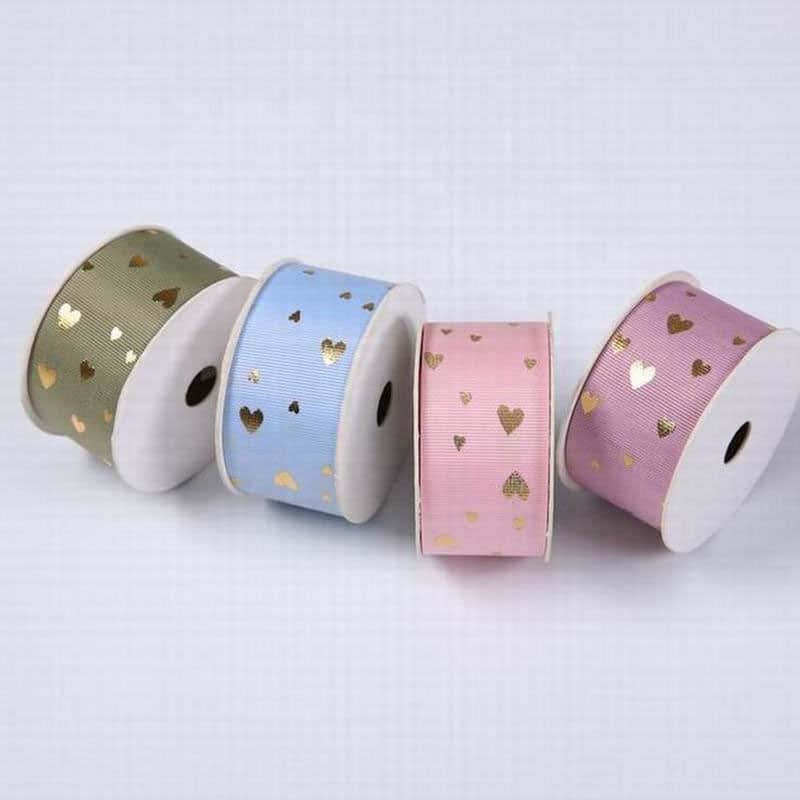
Reading the scope line on a certificate
The scope is the only part of a compliance document that decides anything. Everything else is formatting. Read it in this order and the answer takes two minutes.
| Check point or claim | What it catches, or the proof to request | Who provides it | approval risk | Next action |
|---|---|---|---|---|
| Holder name | Compare the name on the document with your supplier | The ribbon factory | A document belonging to another company | Ask whose document it is |
| Article description | Find your ribbon type in the listed articles | The ribbon factory | Products other than the ribbon you buy | Request an amended scope |
| Color or material limits | Match your order list against the listed range | The ribbon factory | Colors or yarns outside the test | Send your list first |
| Product class | Compare the class against the end use | Buyer and factory | A class that does not match the end use | Confirm the end use |
| Validity | Check the document is current at shipment | The ribbon factory | An expired document at customs | Re-request each order |
| A substance group was tested | Test report naming the substance groups | The factory or its laboratory | Assuming coverage never tested | Read the report, not the summary |
Do this before the sample rather than before the shipment. A scope amendment or a new test is a cost and a schedule item that sits ahead of the production lead time, and a supplier with in-house documents can tell you immediately whether your articles are already inside its scope. Ribbon families are listed on the wholesale ribbon families page.
Who holds the document and who pays for the test
Material and specification fit
Certification follows material, not brand. A recycled polyester line and an ordinary polyester line are different articles even at the same width and color, so a document covering one does not cover the other. Write the material into the specification alongside the width and color, because that is the field the scope check will be run against.
MOQ, cost structure, and lead time
Meedee ribbon quality and certifications does not publish a single numeric minimum: it is confirmed by material, width, color, printing method, artwork version, packing, quantity per SKU and schedule. Compliance sits inside that conversation, because a color outside an existing scope may need testing, and testing is a cost and a schedule item rather than a formality. Ask early whether your colors are already covered. Standard bulk production runs 2–4 weeks after sample approval, and a test that has to be commissioned sits ahead of that lead time, not inside it.
Supplier reliability and quality checks
Ask who pays for a test when a color falls outside the current scope, and settle it before the order rather than after a customer asks for the document. A factory that holds its own certifications can answer the scope question from its records; one that forwards a mill document cannot tell you what its own process adds. Verification of that difference is a single question about whose name is on the document, and the risk of not asking is a rejected shipment defended with a document that was never yours.
Wording the document request so it covers your order
Decision criteria to confirm
Decide what you actually need to prove and to whom. A retailer asking for a certificate, a customs authority asking for a declaration and a brand asking for a test report are three different requests, and sending one generic email produces one generic reply. A garment-industry guide to OEKO-TEX certified supplier directory makes the same point about apparel; for ribbon the scope problem is sharper, because the ribbon is a component of somebody else’s article.
RFQ details to send
Send the article list, the color list and the end use in the same message as the document request. Ask three specific things: whether these articles and colors are inside the current scope, whether the document is current, and what a color outside the scope would require. Each answer is checkable; a yes to all three without detail is not, and the cost of accepting one is a test commissioned later at your expense.
Production handoff details
Ask for the document to be re-issued or re-confirmed at order stage rather than filed once and forgotten. Quality control on the physical goods and verification of the paperwork are two different jobs, and a factory that treats them as one will eventually ship correct goods with a document that lapsed. Put the re-confirmation in the purchase order so it happens without anyone remembering.
In conclusion
Compliance on any OEM and ODM ribbon manufacturing order is a scope question, not a logo question. Ribbon is a component, so the document has to name your articles, your materials and your colors before it says anything about your goods. A certificate naming only the company proves participation and nothing else. The same applies to a chemical test report: it covers the article that was put in front of the laboratory, not the range it came from.
Send the article list, the color list and the end use with the request. Read five lines on whatever comes back: holder, articles, material and color limits, product class, and current status. Ask what a color outside the scope would require, because that answer is a cost driver and a schedule item rather than a formality. Ask whose name is on the document, since that supplier capability question separates a factory answering about its own quality control from a trader forwarding someone else’s paperwork.
The route from here is the ribbon quality and certifications page, because it sets out which schemes apply to which product lines. The risk in skipping it is assuming a recycled-material scheme covers ordinary polyester. So the move is to send your article and color list, ask which are already inside the current scope, and keep the reply for verification against the next order.
Ribbon compliance document FAQ
Which OEKO-TEX document should a ribbon buyer request?
The certificate together with the article and color list it covers. A certificate on its own tells you the supplier participates; the list tells you whether your ribbon is inside it.
Does a company-level certificate cover a specific ribbon color?
Not by itself. Coverage follows the listed articles and materials, so a color or a yarn outside the tested range is outside the scope even when the company is certified.
What must a chemical test report name to cover a ribbon order?
The article tested, the substance groups tested for, and the date. A report that names none of these cannot be matched to your goods, and verification after the fact is not possible.
How does a buyer check the scope of a ribbon compliance certificate?
Read five lines: the holder name, the article description, the material and color limits, the product class, and whether it is current. If your ribbon is not in the article description, the rest does not help, and the risk of reading only the logo is a rejected consignment.
How long does a ribbon test report stay valid?
Treat every document as current only until the next order. Ask for re-confirmation at order stage as part of your quality control routine, because a document that was correct when filed can lapse quietly while the goods keep shipping, and the cost of discovering that at the border is the whole consignment.
RFQ handoff: Send Specs for Review.
Editorial note
Prepared by the MEEDEE Ribbon Editorial Team and reviewed against current product, customization and sourcing information supplied by Meedee Ribbon Inc. Commercial terms such as MOQ, sampling and lead time should be confirmed for each specification.