 EN
EN  FR
FR  DE
DE  KO
KO  ES
ES  SV
SV  AR
AR  DA
DA  CS
CS  IT
IT  JA
JA  TR
TR  PT
PT  NL
NL  PL
PL  FI
FI The sourcing record for grosgrain ribbon printing methods and QC is incomplete until it covers custom artwork, dielines, samples, finishes, and production handoff.
Grosgrain's rib breaks up fine print, so a method that works on satin often will not transfer here. Match the method to the surface first.
Direct answer: For grosgrain ribbon printing methods and QC, buyers should plan custom artwork, dielines, samples, finishes, and production handoff.
How buyers should compare grosgrain ribbon printing methods and qc options
| Option | Best fit | Trade-off | Risk to avoid | Verification | Follow-up |
|---|---|---|---|---|---|
| Current specification | Repeat orders with proven print registration and color consistency | Higher unit cost due to setup reuse and QC documentation | Supplier may drift from approved standard if artwork or substrate changes without notice | Request last three production QC reports and a retained sample from the same dye lot | Confirm that the current spec is locked in your RFQ with a revision date and sign-off |
| Custom option | Brand-specific logo, Pantone match, or multi-color design with tight registration | Longer sample cycle and higher tooling cost for engraved cylinders or screens | Artwork file errors or color deviation may not be caught until bulk production | Require a digital proof and a physical strike-off on the actual grosgrain substrate before production | Include a color tolerance clause (e.g., buyer-approved color tolerance) in your purchase order |
| Safer fallback | High-volume orders where print consistency and on-time delivery outweigh design complexity | Limited to standard colors and simpler print patterns, reducing differentiation | Supplier may substitute lower-cost ink or ribbon grade to meet price targets | Inspect incoming rolls against a retained master sample and check ink adhesion with a tape test | Negotiate a quality agreement that defines acceptable defect rate per roll (e.g., the agreed sampling plan) |
For grosgrain ribbon printing, preserve the current specification decision under one revision number: keep the supplier response, marked sample, approved specification, quotation, and approval owner together. If the evidence conflicts with the approved record, hold the quote, sample, or production release until the deviation is explained in writing. Once the buyer and designated technical authority have accepted the evidence, carry the signed decision record into the purchase order, production handoff, shipment release, and later reorder review so every team works from the same baseline.
- What printing methods do you offer for grosgrain ribbon? Print method affects ink adhesion, edge definition, wash fastness, and minimum run length. Supplier lists heat-transfer, screen-print, and digital with substrate-specific ink systems. Wrong method causes ink bleed, poor edge sharpness, or delamination on grosgrain's ribbed weave. Request print method samples on your exact ribbon width and color.
- How do you verify color match and ink adhesion on grosgrain? Grosgrain's texture can cause uneven ink coverage or poor bond; QC method determines consistency. Supplier uses spectrophotometer for color and tape-pull adhesion test per the buyer-approved shade standard. Visual-only check misses batch-to-batch variation; ink may flake after folding or laundering. Ask for adhesion test report from a recent production lot of similar width.
- What is your approval gate before bulk printing? A formal sample sign-off prevents costly re-runs and schedule delays. Supplier requires signed off strike-off or digital proof with width, color, and print registration. Skipping approval gate can lead to misaligned artwork or wrong ink color in full production. Define approval criteria in writing: color tolerance, registration, and adhesion pass/fail.
- How do you handle print defects on grosgrain ribbon? Defect rate and replacement policy directly affect your usable yield and delivery timeline. Supplier states the agreed sampling plan or better per ISO 2859-1 and replaces defective rolls at no cost. No defined AQL means you may pay for rolls with skips, smears, or misregistration. Insert AQL level and replacement terms into your purchase order or contract.
Supplier proof to verify
Ask the supplier for a print method capability matrix that lists supported ribbon widths, color counts, and registration tolerances. Request a recent third-party lab report on ink adhesion and wash fastness for grosgrain. Cross-check their QC process against ISO 2859-1 sampling to ensure your order gets the same inspection as their standard line.
Use cases that fit
Heat-transfer printing works for small logos and text on grosgrain ribbons used in apparel tags. Screen printing suits bold, opaque designs for promotional ribbons. Offset or flexographic printing handles high-volume continuous patterns for packaging. Match the method to your end-use: if the ribbon will be washed or abraded, choose a method with tested durability.
RFQ and sample checks
In your RFQ, specify the ribbon width, color count, print method, and artwork format (vector preferred). Request a sample that matches your Pantone reference and confirm the print registration tolerance in millimeters. Before approving the sample, run a quick adhesion test by rubbing the print with a white cloth to check for ink transfer.
What grosgrain ribbon printing methods and qc checks belong in sample approval
Use these sample approval checks as one RFQ checkpoint. Each row should identify the requirement, approval evidence, and buyer action before production.
| Requirement | Factory control | Evidence to verify | Order risk | RFQ follow-up |
|---|---|---|---|---|
| Finish or surface effect | Factory verifies gloss, texture, and edge sealing against approved master sample. | Compare hand-feel and visual appearance under buyer-approved viewing conditions to the sealed reference. | Off-spec finish can cause branding inconsistency and rework costs. | Request a finish swatch card with the quotation and retain for sample approval. |
| Artwork or logo file | Factory checks file resolution, color separation, and print registration on grosgrain weave. | Submit a digital proof and a physical strike-off for color and detail accuracy. | Low-resolution or misaligned artwork leads to blurred logos and rejected rolls. | Supply vector artwork and approve the strike-off before production begins. |
| Sample approval | Factory holds production until signed-off sample matches all spec parameters. | Measure width, color coordinates, print density, and edge straightness against the spec sheet. | Skipping sample approval can result in bulk defects and delayed delivery. | Document approval in writing and retain a sealed sample for bulk comparison. |
| Lead time after approval | Factory confirms production slot and daily output rate upon sample sign-off. | Request a production schedule with milestone dates and capacity allocation. | Unconfirmed lead time risks stockouts or expedite fees for urgent orders. | Ask for a binding lead time commitment in the RFQ and include liquidated damages clause. |
Read the rows as one approval sequence for this grosgrain ribbon printing order. Start with finish or surface effect; use the risk and buyer-action columns to decide whether its evidence is sufficient. Verify it with the inspection method and approval evidence recorded in the table.
Keep the supplier response, marked sample, and approval owner for grosgrain ribbon printing under the same revision number. If any proof conflicts with the approved record, hold the quote, sample, or production release until the supplier explains the deviation in writing. Before closing the checkpoint, reconcile the latest drawing, sample, quotation, and approval comments, identify which record controls if they disagree, and document the resolution. Carry the signed sample approval table into the purchase order and production handoff so the same checks support quote comparison, sample approval, shipment release, and later reorders.
Physical sample comparison
When evaluating grosgrain ribbon printing methods, hold the physical sample against the approved reference under consistent lighting. Check that the weave texture does not distort fine text or logos, and that the print adhesion withstands a light rub test. This step ensures the factory's process delivers the specified surface effect before bulk production.
Artwork and color sign-off
Before approving a sample, verify that the artwork file matches the exact color codes and dimensions submitted in the quote request. For custom ribbon manufacturing, request a Pantone-matched strike-off on the actual grosgrain substrate to confirm ink opacity and bleed resistance. Sign-off should be documented with a dated approval form to lock the print standard.
Questions to confirm before ordering:
For this order, use a release rule: approve only when the supplier evidence matches the written requirement.
- Print method and ribbon width match quote request spec: Method mismatch causes ink bleed or misregistration on grosgrain Production manager and buyer procurement lead Compare physical sample to approved artwork and width tolerance Document method and width on approval form before bulk run
- Color accuracy across dye lot and print run: Off-shade ribbon fails brand color standard and delays shipment QC inspector and buyer brand manager Measure color against Pantone reference under buyer-approved viewing conditions Retain sealed wet-proof for bulk production comparison
- Ink adhesion and wash resistance test result: Poor adhesion leads to fading or peeling after first use Lab technician and buyer quality engineer Perform rub test and 3-cycle wash test on sample Request test report and approve only if pass threshold met
- Registration and repeat length on continuous print: Misaligned pattern causes waste and rework at slitting Print press operator and buyer production planner Measure repeat length across 10 consecutive feet of sample Set acceptable tolerance in quote request and verify on first bulk roll
Hold the approved physical sample against the artwork file under daylight. Check that the print method—whether heat-transfer, screen, or digital—produces sharp edges on the grosgrain weave. Any fuzziness or misregistration at this stage will repeat across the entire order. Reject the sample if the print does not match the approved width and color density.
Sign off on a sealed wet-proof before production begins. The wet-proof shows actual ink on the specified grosgrain ribbon substrate. Compare the color to your Pantone reference under controlled lighting. For custom ribbon manufacturing, this step locks the dye formula and prevents costly re-dyeing later. Both buyer and supplier must initial the approved proof.
Inspect the first bulk roll immediately after the press setup is approved. Measure print registration, color consistency, and ribbon width across the roll. If any defect exceeds the tolerance agreed in the quote request, halt production and require a new sample. This gate keeps small issues from becoming a full-order rejection and protects your delivery schedule.
quote request checkpoint
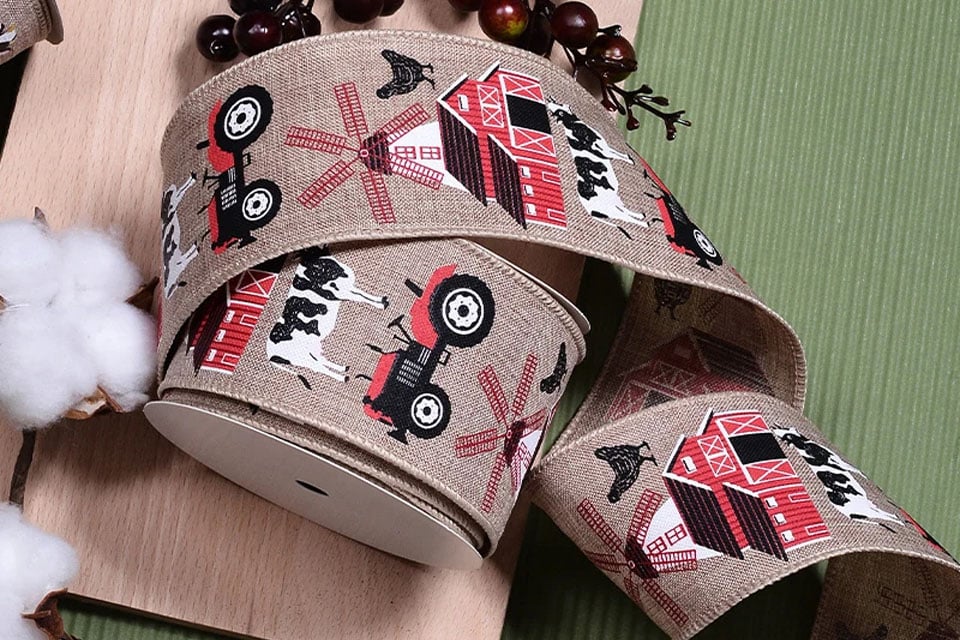
Supplier evidence for grosgrain print capability
Keep each requirement beside its supplier proof and approval owner.
- Verify material and specification fit: Submit grosgrain width, weave density, and print method (silk screen, hot stamp, or digital) from the artwork file. Return a specification sheet confirming material compatibility, print method, and color-matching tolerance for the chosen wholesale ribbon families. Mismatched weave density can cause ink bleed or poor adhesion; avoid approving without a written spec match. Compare the supplier's spec sheet against the original artwork file and request a revised version if any field differs.
- Document MOQ, cost structure, and lead time: Provide order quantity, print method, artwork version, and desired schedule for each SKU. Issue a quotation with MOQ confirmed by material, width, color, and print method, plus standard lead time of 2–4 weeks after sample approval. Unconfirmed MOQ per SKU can trigger rework charges or delayed production; lock all variables before sample sign-off. Cross-check the quotation against the standard 2–4 week lead time after sample approval and request a written confirmation for any custom print complexity.
- Assess supplier reliability and quality checks: Request a sealed wet-proof, a marked production sample, and a first-bulk-roll inspection report. Deliver a wet-proof showing actual ink laydown, a signed sample approval form, and a QC pass for the first bulk roll. Skipping the wet-proof can cause color drift across the run; hold the physical sample against the artwork under daylight. Approve only when the wet-proof, sample, and first-roll report match the spec sheet, then file the approval owner record.
Material and specification fit
Before ordering, confirm that the grosgrain ribbon's weave density and width tolerance match your print method. A loose weave can cause ink bleeding, while a tight weave may reduce adhesion. Request a spec sheet from the supplier that lists material composition, width tolerance, and recommended print technique. Compare this against your artwork file to avoid mismatched ink adhesion or shrinkage during production.
MOQ, cost structure, and lead time
MOQ for custom grosgrain ribbon is confirmed by material, width, color, printing method, artwork version, packing, quantity per SKU, and order schedule. Standard production lead time is 2–4 weeks after sample approval, but complex programs may take longer. Always request a binding quotation that breaks down per-unit cost by color and print method, and verify that the lead time includes sample approval before issuing a purchase order.
Supplier reliability and quality checks
Require a sealed wet-proof to show actual ink laydown, then a marked production sample for color and registration. Inspect the first bulk roll immediately after press setup. Hold the physical sample against the artwork under daylight. Approve only when all three checks pass and file the approval owner record.
RFQ handoff checklist for custom grosgrain ribbon
Before sending a request for quotation, verify each requirement against a physical sample or supplier measurement record. This checklist reduces production risk and aligns factory execution with your spec sheet.
- Specs – Confirm ribbon width tolerance (the buyer-approved tolerance), weave density (ends per inch), and dye lot number. Attach a reference sample to the quote request.
- Cost or minimum order – Request a per‑yard price break at three order volumes. Ensure the quote includes setup fees for custom color matching and edge finishing.
- Production risk – Require a pre‑production sample (the quoted quantity) for colorfastness and shrinkage against the buyer-approved standards. Reject any lot that fails.
- Factory execution – Demand a process control sheet showing heat‑set temperature, dye bath pH, and inspection pass rate. Cross‑check against the sample.
- quote request/sample handoff – Use a standardized form that lists each spec, the supplier’s measured value, and the approval owner’s signature. Keep one copy with the sample.
This checklist turns the quote request into a verifiable contract. For more on grosgrain ribbon types, see our grosgrain ribbons.
Bulk release and reorder controls
An unclear specification or approval record can halt production or cause costly reprints. For this sourcing program, every requirement must be paired with its supplier proof and approval owner.
Decision criteria to confirm
Before quote request, verify each spec against a physical sample or supplier measurement record. Include color tolerance (e.g., buyer-approved color tolerance), print alignment, and ribbon width tolerance.
RFQ details to send
Attach approved sample photos and measurement logs. Specify print method (silk screen, hot stamp, or digital) and ink type. This prevents misquotes on cost and minimum order.
Production handoff details
Factory must sign off on a first-article inspection report covering print adhesion, color accuracy, and edge finish. Reorder triggers require re-approval if any variable changes.
For factory execution details, see MEEDEE ribbon factory.
Source check: ISO 2859-1 sampling inspection standard; Custom Grosgrain Ribbon – Wrapping Guide.
In conclusion
The final approval for your grosgrain ribbon order rests on verifying that the print method—whether silk screen, hot stamp, or another technique—matches the sealed wet-proof sample you approved. Compare the supplier’s QC documentation, including first-article inspection reports and adhesion logs, against your original specification for width, color, and artwork version. Document each check to avoid production delays or costly reprints, then shortlist a supplier who can confirm minimum order and lead time in writing before you request a quote.
To request a quote for this order, use grosgrain ribbons to confirm the final specification, quote assumptions, sample approval, QC evidence, approval risk, and supplier follow-up before bulk order.
Grosgrain ribbon printing methods and qc FAQ
How do buyers verify printing on grosgrain ribbon before production?
Request a sealed wet-proof sample that shows actual ink laydown on the grosgrain ribbing, then compare it to your approved artwork under consistent lighting. Verify that the print method (silk screen, hot stamp, or digital) matches your spec for durability and color fastness, and confirm the supplier’s lead time after sample approval.
Is it really about the grosgrain?
Yes, the ribbed texture of grosgrain affects ink adhesion and print sharpness, so you must check that the supplier uses a method suited to that surface. Ask for a production-run sample to confirm edge definition and wash resistance, and document the approved print method in your quote request.
What types of personalised ribbon printing are available?
Common methods include silk screen for bold logos, hot stamp for metallic finishes, and digital print for full-color gradients, each with different cost and minimum order implications. For floristry or retail packaging, specify the ribbon width and print repeat length, then request a strike-off sample to verify color and adhesion before bulk production.
How would you print on 1/8 inch silk ribbons?
Turn the answer into a written quote request note: intended use, ribbon width, material, finish, packing method, and approval owner. Ask the supplier what sample proof or QC record will confirm the same result in production. A vague answer can turn into quote mismatch, sample delay, packing damage, or repeat-order drift.
How hard is it to find cotton grossgrain ribbon?
Cotton grosgrain ribbon is available from specialized suppliers, but you must verify the fiber content and weave density in a physical sample to ensure it meets your application’s strength and washability needs. Confirm the minimum order and lead time for custom-dyed or printed cotton grosgrain, as these often differ from polyester options. Put the locked requirement into the quote request or sample approval notes.
quote request handoff: Send Specs for Review.
Editorial note
Prepared by the MEEDEE Ribbon Editorial Team and reviewed against current product, customization and sourcing information supplied by Meedee Ribbon Inc. Commercial terms such as MOQ, sampling and lead time should be confirmed for each specification.