 EN
EN  FR
FR  DE
DE  KO
KO  ES
ES  SV
SV  AR
AR  DA
DA  CS
CS  IT
IT  JA
JA  TR
TR  PT
PT  NL
NL  PL
PL  FI
FI Organza is chosen for how it lets light through, so the packaging underneath is as much part of the selection as the ribbon is.
Direct answer: Choose organza by how it lets light through over the packaging underneath, then confirm width, edge finish, color, MOQ, and the sample approval path in the quotation.
Set Organza Sample, MOQ, Material, Width, and Color Controls
Use the table below as one RFQ checkpoint. Each row should identify the requirement, approval evidence, and buyer action before production.
| Requirement | Factory control | Evidence to verify | Order risk | RFQ follow-up |
|---|---|---|---|---|
| Sample approval | Factory holds pre-production sample against spec sheet; signs off on width, color, edge finish. | Request AATCC or in-house lightbox evaluation; compare sample to approved standard under buyer-approved viewing conditions. | Approved sample may drift from production bulk if control method is not locked per SKU. | Request pre-production sample with signed spec sheet; approve only after dimensional and color measurement. |
| MOQ and order quantity | MOQ confirmed per material, width, color, printing method, artwork version, packing, and schedule. | Review written quotation that itemizes MOQ by each variable; do not accept a single global number. | Unclear MOQ breakdown can cause order splits or unplanned setup fees for custom organza. | Request RFQ that states MOQ per SKU and per color; confirm lead time for each line item. |
| Material / substrate | Factory verifies yarn denier, weave density, and filament type (polyester or nylon) per incoming lot. | Request material certificate or perform burn test; check GSM against agreed specification. | Substrate substitution (e.g., lower denier) reduces tensile strength and drape consistency. | Request material declaration with lot number; approve only after substrate verification. |
| Width or size tolerance | Factory measures width at three points per roll using calibrated steel rule; tolerance within the buyer-approved tolerance. | Measure 10 random rolls from production lot; reject if any roll exceeds the buyer-approved tolerance from spec. | Width variation causes uneven bow loops or misalignment in automated packaging equipment. | Request width measurement report from factory; include tolerance clause in purchase order. |
| Finish or color control | Factory uses spectrophotometer for L*a*b* values; holds dye lot tolerance to buyer-approved color tolerance. | Request dye lot report; visually compare production roll to approved sample under daylight 6500K. | Off-shade finish or metamerism leads to customer returns and brand inconsistency. | Request color standard swatch and dye lot continuity plan; approve only after buyer-approved color tolerance verification. |
Read the rows as one approval sequence for this organza ribbons product order. Start with sample approval; use the risk and buyer-action columns to decide whether its evidence is sufficient. Verify it with the inspection method and approval evidence recorded in the table.
Keep the supplier response, marked sample, and approval owner for organza ribbons product under the same revision number. If any proof conflicts with the approved record, hold the quote, sample, or production release until the supplier explains the deviation in writing. Before closing the checkpoint, reconcile the latest drawing, sample, quotation, and approval comments, identify which record controls if they disagree, and document the resolution. Carry the signed requirement table into the purchase order and production handoff so the same checks support quote comparison, sample approval, shipment release, and later reorders.
Pick an Organza Construction for Packaging, Branding, Bridal, or Recycled Content
| Option | Best fit | Trade-off | Risk to avoid | Verification | Follow-up |
|---|---|---|---|---|---|
| Standard organza ribbon (nylon/polyester, heat-cut edge) | High-volume packaging runs where consistent width and fray resistance are critical | Lower drape and sheen vs. silk organza; limited color matching for brand-specific Pantones | Edge curling or uneven heat-cut seals on narrow widths | Request a 10-meter sample; measure width at three points and inspect edge seal under appropriate inspection magnification | Send your width tolerance and color target to supplier for sample match |
| Custom printed organza ribbon (rotary screen or digital transfer) | Branded gift wrap, event ribbons, or retail packaging with logo or seasonal artwork | Minimum run lengths per design; digital transfer may show slight hand feel vs. woven jacquard | Artwork distortion on sheer substrate; color shift between proof and production roll | Approve a strike-off on actual organza substrate; confirm ink opacity against your PMS chip under daylight | Provide vector artwork with minimum 1pt stroke for fine details; confirm custom ribbon manufacturing parameters with your supplier |
| Woven edge organza ribbon (selvedge finish) | Luxury retail or bridal applications where raw cut edges are unacceptable | Narrower width range; higher cost per yard vs. heat-cut | Inconsistent selvedge density causing visible edge puckering on long rolls | Unroll the quoted quantity and check edge straightness against a ruler; pull test for edge strength | Request a selvedge density spec (ends per inch) and compare to your approved reference sample |
| Recycled polyester organza ribbon (rPET filament) | Eco-conscious brand programs requiring certified recycled content in packaging trim | Limited color palette; slightly higher melt-point during heat-cutting may affect edge finish | Supplier claims recycled content without third-party certification (e.g., GRS) | Request GRS certificate or mass balance statement; test filament composition via DSC | Add recycled-content percentage and certification requirement to your RFQ spec sheet |
For organza ribbons product, preserve the standard organza ribbon (nylon/polyester, heat-cut edge) decision under one revision number: keep the supplier response, marked sample, approved specification, quotation, and approval owner together. If the evidence conflicts with the approved record, hold the quote, sample, or production release until the deviation is explained in writing. Once the buyer and designated technical authority have accepted the evidence, carry the signed option comparison into the purchase order, production handoff, shipment release, and later reorder review so every team works from the same baseline.
Hands-On Checks for an Organza Ribbon Sample
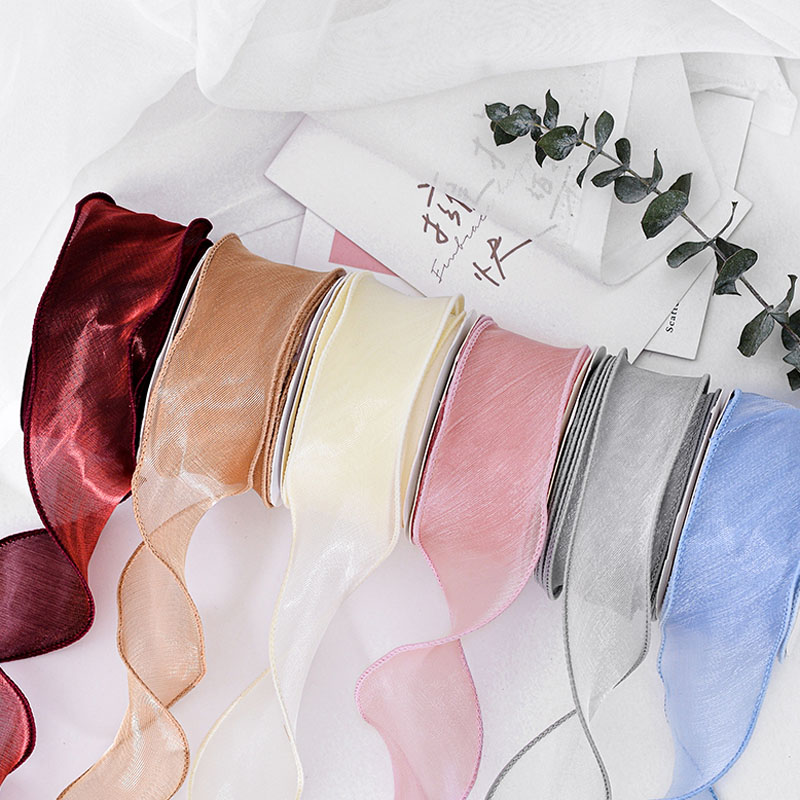
Before approving any organza wholesale ribbon families sample, verify the physical proof against your original RFQ. The MEEDEE Ribbon editorial team recommends this checklist to ensure the sample matches your specification:
- Width and thickness: Measure with a caliper; confirm within the buyer-approved tolerance of spec.
- Color match: Compare under buyer-approved viewing conditions; use a spectrophotometer if available.
- Edge finish: Inspect for fraying or uneven selvedge; run a finger along both edges.
- Dye fastness: Rub a damp white cloth on the ribbon; check for color transfer.
- Stiffness/hand feel: Fold and release; note if the ribbon holds a crease or returns to flat.
Document any deviation and request a corrected proof before moving to production. This step reduces cost overruns and production delays.
Log Organza Supplier Claims Against a Verification Method
Each row in the table below identifies the required specification, the supplier’s claimed value, and the verification method.
| Specification | Supplier Claim | Verification Method |
|---|---|---|
| Width tolerance | the buyer-approved tolerance | Measure 3 samples |
| Color fastness | Supplier-stated grade | Buyer-approved test method |
| Edge finish | No fraying | Visual + pull test |
Supplier evidence to request
Request mill test reports and a signed specification sheet. Cross-check against your quote request to flag any deviation before sample approval.
Sample approval evidence
Before approving any organza OEM and ODM ribbon manufacturing sample, verify the physical proof against your original quote request. Use the table above as your approval sequence.
Reorder control records
Establish a reorder trigger based on lead time and usage rate. Confirm the supplier can hold a consistent shade lot across production runs. Document this in your quote request handoff notes.
Ask About Organza Looms, Tensile Testing, and Reorder Triggers
- Does the supplier have dedicated organza ribbon looms and in-house dyeing? Confirms the supplier can control yarn tension and color consistency across production runs, not just resell generic ribbon. Supplier lists specific organza loom types and dye-mixing records for each batch. Without dedicated looms, edge fraying and shade variation may appear only after bulk cutting. Request a loom list and a dye-lot continuity record for the last three organza orders.
- How does the supplier test organza ribbon tensile strength and edge finish? Ensures the ribbon will not tear during automated tying or packaging, which is a common hidden defect. Supplier shares a test report with minimum break force and edge-fray rating per roll. Weak edges cause production line stops and customer returns, increasing total cost beyond the ribbon price. Request a tensile test certificate from the last three organza lots and a fray-check video.
- Can the supplier provide a written reorder trigger based on lead time and usage rate? Prevents stockouts or overstock by aligning production scheduling with your actual consumption pattern. Supplier proposes a reorder point formula using your weekly usage and their 2–4 week standard production window. Without a trigger, you may run out during peak season or pay rush fees for expedited production. Share your monthly usage estimate and ask the supplier to draft a reorder threshold in the quotation.
Source check: ISO 2859-1 sampling inspection standard.
In conclusion
Final approval of your organza ribbon supplier begins with a rigorous check of the specification sheet against your quote request—verify width, edge finish, grams per meter, and color fastness before any sample is approved. Compare cost and MOQ terms across shortlisted suppliers, ensuring the lead time aligns with your production schedule, and document the agreed quality benchmarks to mitigate reorder risk. With the approved sample and signed spec locked in, you can confidently shortlist a supplier and proceed to request a quote for your first production run.
For quote planning, MEEDEE’s custom-ribbon reference lists a 3-100 millimetres overall ribbon width range and a 2-4 week standard production window after sample approval. Treat both as starting parameters and reconfirm the selected organza construction in the quotation.
To request a quote for organza ribbons product, use organza ribbons to confirm the final specification, quote assumptions, sample approval, QC evidence, approval risk, and supplier follow-up before bulk order.
Frequently Asked Questions
How should a b2b buyer choose product type?
Shortlist organza ribbons by width, edge finish (selvedge vs. cut), and grams per meter to match your packaging or garment application. Compare cost per roll across these specs, confirm the minimum order per color and width in your quote request, and verify the supplier’s minimum run length for custom dye lots to avoid production delays. Ask how QC will check the sample, color, finish, packing, and bulk order.
Which supplier proof should buyers request for organza ribbons?
Request a pre-production sample that matches your specified width, color, and edge finish, then measure it against your spec sheet. Ask for a mill test report on colorfastness and tensile strength, and document any deviation before approving. Follow up by confirming the sample approval date and the standard production lead time—typically 2–4 weeks after sign-off. Ask the supplier to confirm factory capability and who owns follow-up.
What should buyers lock before approving product selection checklist?
Lock the approved sample, signed specification sheet, and agreed minimum order per SKU before moving to production. Verify the supplier’s QC checklist includes edge inspection, color consistency across rolls, and packaging requirements. Confirm the reorder trigger based on your usage rate and the confirmed lead time to maintain inventory without overstocking.
quote request handoff: Send Specs for Review.
Editorial note
Prepared by the MEEDEE Ribbon Editorial Team and reviewed against current product, customization and sourcing information supplied by Meedee Ribbon Inc. Commercial terms such as MOQ, sampling and lead time should be confirmed for each specification.