 EN
EN  FR
FR  DE
DE  KO
KO  ES
ES  SV
SV  AR
AR  DA
DA  CS
CS  IT
IT  JA
JA  TR
TR  PT
PT  NL
NL  PL
PL  FI
FI A ribbon trader and a ribbon weaver answer an RFQ the same way. What separates them is the equipment evidence they can produce on request.
Direct answer: Before sending an RFQ, shortlist ribbon manufacturers on proof, capability, quality, MOQ, and delivery criteria, and ask for the equipment evidence that separates a ribbon weaver from a trader.
Confirm the Manufacturer Scope Behind the Sales Claim
Score the factory’s reply against the RFQ requirement, evidence file, approved sample, and commercial terms.
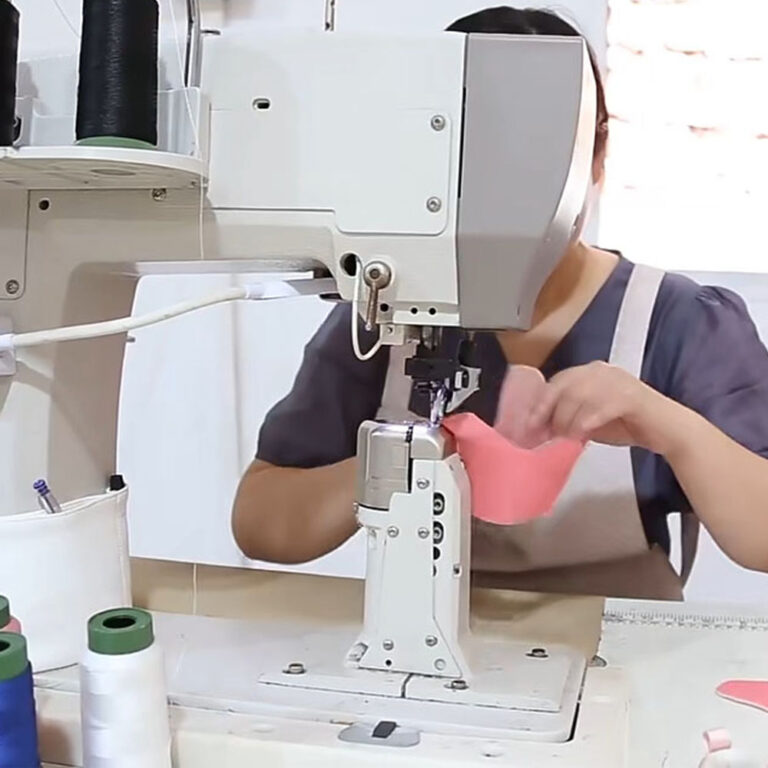
- Supplier capability: Verify the factory runs ribbon-specific looms and finishing lines, not a general textile mill. Factory tour or video shows dedicated ribbon weaving, slitting, and heat-cutting stations. Supplier lists broad textile capability but cannot name ribbon width tolerances or material types. Request a capability statement listing ribbon production equipment and daily output by width.
- MOQ or order quantity: Confirm minimum order by material, width, color, printing method, artwork version, packing, and quantity per SKU. Supplier provides a written minimum order matrix that breaks down each variable with no hidden minimums. Supplier gives a single flat minimum order number without explaining how it changes by color or print type. Attach a line-item RFQ that lists each variable separately and ask for per-variable minimum order confirmation.
- Quality control: Check whether the supplier uses AQL sampling (ISO 2859-1) for ribbon rolls and printed batches. Supplier shares a QC checklist that includes AQL level, defect classification, and roll-by-roll inspection records. Supplier says quality is guaranteed but cannot describe a sampling plan or show inspection logs. Ask for the last three batch inspection reports and the AQL level used for ribbon.
- Verification method: Require a pre-production sample that matches the approved artwork, color standard, and width tolerance. Supplier sends a sealed sample with a signed approval sheet and a spectrophotometer reading. Supplier offers only a digital mockup or a photo of a similar ribbon as proof of capability. Hold the sample against a physical color standard and measure width with a caliper before signing off.
- Identify whether the supplier starts bulk production before receiving written sample approval. Supplier has a written policy requiring signed approval before any bulk run begins. Supplier rushes to production after verbal okay, risking a full batch that fails spec. Document a written approval gate in the purchase order and confirm it in the order confirmation.
- Establish a reorder check that confirms the same material lot, dye batch, and print registration. Supplier maintains a production history file that ties each reorder to the original approved sample. Supplier treats every reorder as a new job without referencing prior specs or samples. Include a reorder clause that requires the supplier to pull the original approval file before cutting.
Score the factory’s reply against the quote request requirement, evidence file, approved sample, and commercial terms.
- What ribbon widths and materials does the manufacturer produce in-house? A sales claim may cover only one loom type; in-house capability determines if your spec is standard or outsourced. Supplier lists specific widths, weaves, and dye methods they run on their own equipment. Outsourced production adds lead time, quality variance, and hidden coordination costs. Request a facility tour or video showing the looms and dye house for your material.
- What is the confirmed minimum order per SKU for my ribbon width, color, and print method? minimum order changes by material, width, color, printing method, artwork version, packing, and schedule. Supplier provides a per-SKU minimum order breakdown in writing with conditions for each variable. A single minimum order number hides reorder minimums, color-match surcharges, or split-lot penalties. Attach your quote request with all variables and ask for a signed minimum order confirmation per line item.
- How does the manufacturer verify color consistency and print registration before bulk production? Sample approval alone does not guarantee repeatable color across production runs. Supplier uses a spectrophotometer and a signed off strike-off as the production standard. Without a measurement standard, you may receive ribbon that fails your packaging or branding spec. Ask for the color tolerance range and a copy of the pass/fail log from the last three runs.
- What sample approval gate does the supplier require before bulk production begins? A clear approval gate prevents the factory from starting production without your written sign-off. Supplier states that bulk cutting starts only after you approve a physical sample and a digital proof. Without a gate, the factory may run material that does not match your approved artwork or color. Confirm the approval process in your purchase order and request a sample tracking number.
- What reorder verification does the manufacturer use to match the original approved sample? Reorders often drift from the original spec if the factory changes dye lots or loom settings. Supplier keeps a sealed reference sample and a production record for every prior order. A mismatched reorder can halt your packaging line or cause a retail compliance failure. Ask for the reorder checklist and a photo of the archived reference sample for your SKU.
Match Equipment and Process Evidence to the Ribbon Program
For ribbon manufacturer verification, use a release rule: approve only when the supplier evidence matches the written requirement.
- Supplier cannot demonstrate dedicated ribbon manufacturing equipment. Without looms or slitting machines specific to custom ribbon manufacturing, the supplier may subcontract or use incompatible processes, risking inconsistent width, edge finish, and color fastness across your program. Request a facility tour or video walk-through showing the looms, dye vats, and finishing lines used for your ribbon type. Equipment list with make, model, and year for each ribbon production line. Compare the listed equipment against your ribbon width, material, and volume requirements before shortlisting.
- No documented inline quality check during ribbon production. Ribbon defects such as uneven dye penetration, frayed edges, or tension marks are often caught only at final inspection, leading to high rejection rates and delayed orders. Ask for the standard QC checkpoints during weaving, dyeing, and slitting stages. In-process inspection records or a process flow chart with QC hold points. Verify that at least one inline check occurs before the ribbon leaves the production floor.
- Supplier cannot provide a written approval gate for first-production samples. Without a formal sample approval step, bulk production may proceed with unapproved color, width, or print registration, forcing costly rework or order rejection. Require a signed sample approval form before any bulk run begins. Sample approval protocol including sign-off authority and revision tracking. Confirm the approval gate is tied to your purchase order release schedule.
- Supplier has no method to verify color consistency across dye lots. Color variation between production runs can make your ribbon program look mismatched, especially for branded packaging or event use where shade uniformity is critical. Ask how the supplier measures and records color values for each dye lot. Spectrophotometer readings or Pantone matching reports for the last three production lots. Set a color tolerance standard in your quote request and require lot-to-lot reports with each shipment.
- Supplier cannot confirm the origin of ribbon raw materials. Unverified yarn or dye sources may introduce contaminants, inconsistent tensile strength, or restricted substances that fail your end-use compliance requirements. Request a raw material traceability document from yarn supplier to finished ribbon. Mill certificates or supplier declarations for yarn and dye batches used in your order. Cross-reference the material origin with your restricted substance list before approving production.
quote request checkpoint
Review Sampling Color Print and Quality Controls
| Criteria | Baseline option | Confirmed option | Buyer meaning | Risk to avoid | Follow-up |
|---|---|---|---|---|---|
| Specification details | Full spec sheet with width, material, color, print method, and artwork version | General description without dimensional or print tolerances | You need exact specs to match your ribbon design to production capability | Missing tolerances leads to color shift or width variation in bulk | Request a spec template from each supplier before quoting |
| Cost driver | Transparent cost breakdown by material, width, color count, and print method | Single unit price without line-item cost factors | Know which variable drives price so you can negotiate on alternatives | Hidden cost drivers inflate final invoice after sample approval | Ask for a cost driver table per wholesale ribbon families |
| Quality control | In-process QC checks at dye lot, print run, and final inspection | Final inspection only at packing stage | Early QC catches defects before they compound across production | Late inspection means you accept or reject entire batch with no rework time | Request QC checkpoint documentation from the factory |
| Approval risk | Written approval gate before bulk production after sample sign-off | Oral confirmation or email-only approval | A formal gate prevents production starting on unapproved specs | Oral approval leads to disputed color or print changes mid-run | Define a written approval form in your purchase order |
| Lead time | Standard production 2–4 weeks after sample approval | Estimated lead time without sample approval dependency | Lead time starts only after you approve the sample, not at order placement | Unclear start point causes missed delivery windows | Confirm lead time starts after written sample sign-off |
For ribbon manufacturer verification, preserve the specification details decision under one revision number: keep the supplier response, marked sample, approved specification, quotation, and approval owner together. If the evidence conflicts with the approved record, hold the quote, sample, or production release until the deviation is explained in writing. Once the buyer and designated technical authority have accepted the evidence, carry the signed decision record into the purchase order, production handoff, shipment release, and later reorder review so every team works from the same baseline.
Request Documents Communication Records and Export Proof
For ribbon manufacturer verification, the first step is to request documented communication records—such as email threads, quote request responses, and sample handoff logs—that show the supplier’s ability to match your written specifications. These records should include export proof like bill of lading or customs clearance, confirming the factory’s execution history. Without these, production risk increases due to unverified claims on specs, cost, or minimum order.
Use a table to compare key verification points:
| Verification Point | Required Document | Risk if Missing |
|---|---|---|
| Specs alignment | RFQ response with detailed dimensions | Cost overruns |
| Cost/MOQ confirmation | Signed quotation | Hidden fees |
| Production execution | Sample handoff report | Quality delays |
| Export compliance | Bill of lading | Customs holds |
After reviewing these records, cross-check the factory’s execution against your quote request. This ensures the supplier’s capability is backed by evidence, not just sales claims. The MEEDEE Ribbon editorial team publishes B2B ribbon sourcing best practices, emphasizing that verified communication and export proof are essential for a reliable handoff.
Score the Supplier Before Releasing the RFQ
At this process checkpoint, you must have a completed supplier capability scorecard that rates each candidate on verified specs, cost or minimum order alignment, production risk, factory execution, and quote request/sample handoff readiness. Use the following ordered list as your release rule—approve only when the supplier meets all criteria.
- Specs Verification: Confirm the supplier can produce your exact ribbon width, material (e.g., satin, grosgrain), color fastness, and finish (e.g., edge sealing) per your technical sheet.
- Cost or minimum order Alignment: Ensure the quoted unit price and minimum order quantity match your budget and volume requirements without hidden fees.
- Production Risk Assessment: Evaluate the supplier’s defect rate history, machine capacity for your order size, and raw material sourcing stability.
- Factory Execution Capability: Verify the supplier has documented quality control processes, sample approval workflows, and on-time delivery records.
- quote request/Sample Handoff Procedure: Confirm the supplier provides a clear timeline for sample creation, revision cycles, and final approval before bulk production.
Use this scoring table to compare suppliers before releasing the quote request:
| Criterion | Weight | Score (1-5) |
|---|---|---|
| Specs match | Set by buyer | |
| Cost/MOQ fit | Set by buyer | |
| Production risk | Set by buyer | |
| Factory execution | Set by buyer | |
| RFQ/sample handoff | Set by buyer |
Only release the quote request to suppliers scoring 4 or above in all criteria. This ensures you move forward with verified partners, reducing rework and delays.
Related: about MEEDEE Ribbon.
Conclusion: Release the buyer follow-up Only After the Evidence Matches the Requirement
The final approval in ribbon sourcing comes only after you have compared the factory’s documented capabilities against your exact specification, cost parameters, and lead-time requirements. Before you shortlist a supplier, verify that material composition, width, color reference, and printing method match your approved artwork and packing spec. Validate the supplier’s quality controls and sample history to reduce production risk, then confirm that the quoted minimum order and schedule align with your order plan. Only when every evidence point—from capability score to pre-production sample—matches your requirement should you approve the sample and move forward.
To request a quote for this order, use MEEDEE ribbon factory to confirm the final specification, quote assumptions, sample approval, QC evidence, approval risk, and supplier follow-up before bulk order.
How to Check a Ribbon Manufacturer Before Sending an RFQ FAQ
Which inputs should buyers send with the RFQ?
Send the exact material composition, width, color reference (PMS or brand standard), printing method, artwork version, packing format, and quantity per SKU. Confirm the minimum order for each unique combination in the quote request, as it varies by these inputs. Request a cost breakdown by component and ask for the standard production lead time, typically 2–4 weeks after sample approval, but confirm for your specific program. Ask the supplier to confirm factory capability and who owns follow-up.
Which physical sample and supplier records should buyers verify?
Request a pre-production sample that matches your specification sheet exactly—check color accuracy, print registration, width tolerance, and material hand feel. Verify the supplier’s quality control records, such as incoming material inspection reports and in-process checks. Document the sample approval in writing, noting any deviations, and keep a sealed reference sample for bulk production comparison.
What should buyers freeze before production or reorders?
Freeze the final artwork, color standard, material grade, width, packing spec, and accepted quality limit (AQL) before bulk production. For reorders, confirm that the same specification and sample reference are still valid, and request a new pre-production sample if the original is more than six months old. Document the freeze in a signed specification sheet and share it with the supplier to avoid last-minute changes.
Next step: Send Specs for Review.
Source check: ISO 2859-1 sampling inspection standard.
Editorial note
Prepared by the MEEDEE Ribbon Editorial Team and reviewed against current product, customization and sourcing information supplied by Meedee Ribbon Inc. Commercial terms such as MOQ, sampling and lead time should be confirmed for each specification.