 EN
EN  FR
FR  DE
DE  KO
KO  ES
ES  SV
SV  AR
AR  DA
DA  CS
CS  IT
IT  JA
JA  TR
TR  PT
PT  NL
NL  PL
PL  FI
FI A custom festival ribbon program needs a written specification before the buyer can plan custom artwork, dielines, samples, finishes, and production handoff; otherwise suppliers may quote different product and approval assumptions.
This guide maps custom festival ribbon specifications and evidence to comparable sample requests and RFQ fields.
Direct answer: For a custom festival ribbon program, align artwork files, dimensions, material and finish targets, a signed-off sample, packing instructions, and the bulk-production handoff in one controlled specification.
Settle Festival Ribbon Finish and Artwork Before the Sample Locks the Spec
| Requirement | Factory control | Evidence to verify | Order risk | RFQ follow-up |
|---|---|---|---|---|
| Finish or surface effect | Factory holds swatch library and process parameters for matte, gloss, or textured finishes. | Compare physical finish against a sealed reference swatch under consistent lighting. | Unmatched finish alters ribbon appearance and may cause festival branding rejection. | Request a finish-matching sample card with your RFQ before production. |
| Artwork or logo file | Factory preflights file for resolution, color mode, and bleed before plate making. | Submit a vector or high-res raster file and request a digital proof of print alignment. | Low-resolution or wrong-color-mode artwork causes blurry prints and reprint costs. | Send final artwork in the required format and approve the digital proof. |
| Sample approval | Factory holds a signed-off reference sample and records all dimensional and color tolerances. | Physically measure sample against spec sheet for width, color, and print registration. | Unapproved sample leads to bulk production that fails your festival quality check. | Sign and return the sample approval form to release production. |
Before committing to a festival ribbon program, the buyer must define the requirement across finish, artwork, and sample approval. Each dimension carries distinct factory controls and verification steps that directly affect order risk. The comparison turns on how thoroughly the buyer documents these parameters before the RFQ is issued, not on generic feature lists.
Approval of the sample locks the production specification and triggers the factory's workflow. The buyer's follow-up is to confirm all commercial numbers—including pricing, lead time, and quantity breaks—in the written quote request before authorizing bulk manufacture. Do not rely on verbal agreements; ensure every term is documented in the quotation.
Compare the supplier record with the ISO 2859-1 sampling inspection standard before accepting the requirement.
Trade-Offs Between Approved, Alternative, Custom, and Stock Festival Ribbon
| Option | Best fit | Trade-off | Risk to avoid | Verification | Follow-up |
|---|---|---|---|---|---|
| Current specification | Festival ribbon program with approved physical sample and signed spec sheet | Locks material, width, color, and print method; changes require new sample approval | Stale spec may drift from supplier's production capability if not re-verified each order | Compare current spec sheet against latest production sample; check revision date | Document revision number and re-confirm with supplier before next bulk run |
| Alternative specification | Testing a different material or width for cost savings or new festival theme | Requires separate sample run and may affect lead time; MOQ may differ | Unvalidated alternative may fail dye lot match or print registration | Request physical pre-production sample; compare to current spec for color and tolerance | Approve alternative sample only after full dimensional and color check |
| Custom option | Unique festival ribbon with proprietary print, custom ribbon manufacturing process, or special finish | Longer lead time, higher minimum quantity, and non-refundable tooling cost | Custom artwork may shift during production; no off-the-shelf replacement available | Require signed proof and pre-production sample; confirm ink and material compatibility | Lock artwork and spec sheet; confirm production timeline and MOQ by RFQ |
| Safer fallback | Standard stock ribbon with generic print or solid color for tight deadlines | Limited design options; may not match festival branding exactly | Stock ribbon may have inconsistent dye lots across reorders | Request current stock sample and dye lot number; check inventory availability | Confirm stock level and lead time; order buffer quantity for continuity |
quote request checkpoint
Confirm the Festival Ribbon Strike-Off, Then Request a Physical Sample
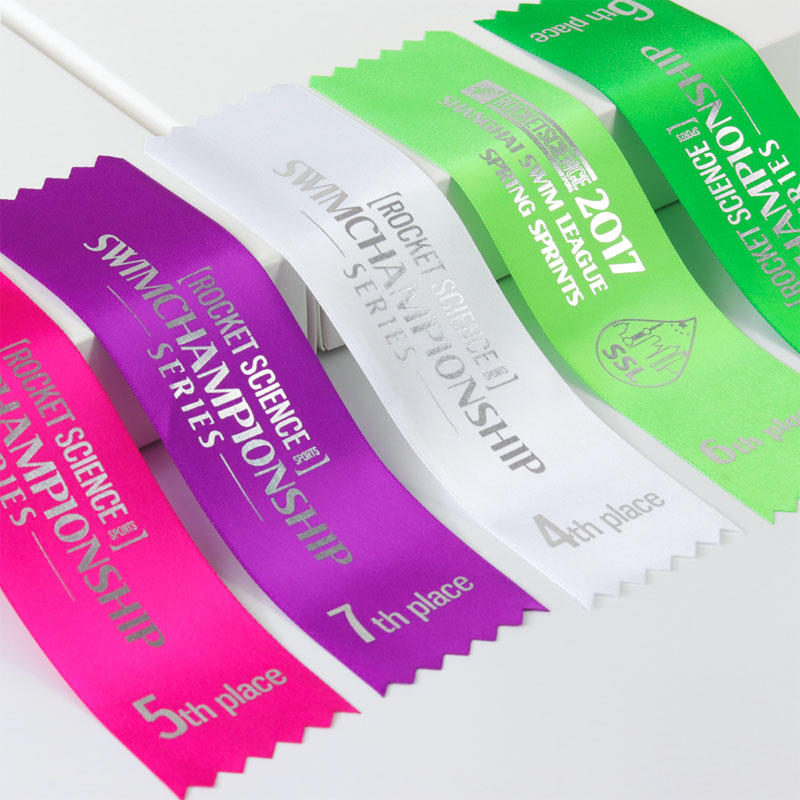
Before approving a festival wholesale ribbon families sample, confirm that the factory has provided a physical strike-off or digital proof that matches your quote request specifications. This proof must include the exact material, width, and color values (e.g., Pantone or CMYK) you submitted. Without this documented match, production risk increases significantly—misprints or material substitutions can occur.
Use this checklist to verify the proof:
- Does the proof show the correct ribbon width?
- Do the printed colors match your submitted color standard?
- Is the material type (e.g., grosgrain, satin) confirmed in writing?
- Has the factory signed off on the artwork version and any text alignment?
After verification, request a physical sample for tactile and color comparison. This step ensures factory execution aligns with your program requirements before moving to production.
Verify the Festival Ribbon Sample and Write Reorder Terms into Your Contract
At this stage, the record needed before the next stage is a validated decision asset—a structured file or matrix that consolidates supplier proof, sample approval, and reorder control checks. This asset ensures your festival ribbon program moves forward with verified specs, cost alignment, and factory execution readiness.
Supplier Proof Check
Verify that the factory can produce your custom ribbon specs—width, color, material, and print—by reviewing their quality documentation and past order records. Request a pre-production sample that matches your Pantone or PMS code, and confirm the supplier’s ability to meet your required tolerance (e.g., the buyer-approved tolerance width). This step reduces production risk and ensures the quote request handoff is based on factual capability.
Sample Approval Check
Once the sample arrives, compare it physically against your custom spec sheet. Measure the ribbon width, check color consistency under daylight and artificial light, and test the material’s tensile strength if needed. Approve only when all parameters match your written requirements, and document the approval with a photo and signed form. This prevents costly rework during bulk production.
Reorder Control Check
Establish a reorder trigger based on inventory levels and lead time. For example, set a minimum stock threshold that, when reached, automatically initiates a new quote request to the same approved supplier. Include a clause in your contract that locks in the agreed cost and MOQ for a defined period, ensuring price stability and factory execution consistency across reorders.
For more on custom ribbon specifications, visit our OEM and ODM ribbon manufacturing.
What to Ask Festival Ribbon Suppliers About Color Matching and QC
- Does the supplier have documented experience producing festival ribbons with custom colors and widths? Verifies the factory can match your event's color codes and MEEDEE ribbon factory dimensions without excessive waste or rework. Supplier provides a capability sheet listing specific festival ribbon orders, including color-matching records and width tolerances. A supplier without relevant experience may deliver off-shade ribbons or inconsistent widths, causing last-minute event delays. Request three past festival ribbon order references and compare their color accuracy against your Pantone targets.
- What verification method does the factory use to confirm ribbon color and width before bulk production? Ensures the supplier has a repeatable quality check that prevents non-conforming material from reaching your event. Factory uses a spectrophotometer for color and a calibrated ruler for width, with documented pass/fail thresholds. Without a documented verification method, you may receive ribbons that fail your event's visual or dimensional standards. Ask for a copy of the factory's in-process inspection report template for festival ribbon runs.
- What is the approval risk if we skip a pre-production sample for this festival ribbon order? Identifies whether the supplier can guarantee color, width, and material consistency without a physical sample sign-off. Supplier states that skipping the sample increases the risk of mismatch and recommends a sealed sample as a contractual baseline. Skipping the sample may lead to bulk ribbons that do not match your approved spec, with no recourse for rework. Insist on a pre-production sample and document the approval date and sign-off in your order file.
- What quality control steps are applied to festival ribbons before packing and shipping? Confirms that the factory checks for defects like uneven dye, frayed edges, or incorrect yardage before dispatch. Supplier describes a final inspection that includes visual check, yardage count, and packaging integrity test. Poor QC can result in ribbons with visible flaws or short lengths, causing event setup problems and waste. Request a copy of the factory's final inspection checklist and agree on a defect tolerance before production.
In conclusion
The final approval of your festival ribbon program comes down to verifying that every specification—material, width, color, and printing method—matches the physical sample and documented spec sheet. Compare the quoted MOQ and lead time against your order schedule, and confirm that the supplier’s quality signals, such as certifications or audit reports, align with your risk tolerance. Once you have validated the spec and shortlisted a supplier, request a quote that locks in all parameters before production begins.
To request a quote for festival ribbons custom, use festival ribbons to confirm the final specification, quote assumptions, sample approval, QC evidence, approval risk, and supplier follow-up before bulk order.
Frequently Asked Questions
How should a b2b buyer plan custom order?
Only if you first document your festival ribbon specification—material, width, color, printing method, and artwork version—then confirm the MOQ and lead time with the supplier for each SKU. Compare quotes from shortlisted factories, verify their production capacity and certification (OEKO-TEX, GRS for recycled styles, Sedex audit), and request a pre-production sample to check color accuracy and print registration before approving the order.
Which supplier proof should buyers request for festival ribbons?
Request a physical pre-production sample that matches your custom spec sheet exactly, and verify it against your approved artwork, color standard, and width tolerance. Also ask for a production timeline commitment—standard is 2–4 weeks after sample approval—and confirm the MOQ per color and design. Check the supplier’s quality control process, such as in-line inspection during printing or dyeing, and request a test report for colorfastness or material composition if your festival use requires outdoor or repeated handling.
What should buyers lock before approving custom program planning checklist?
Lock dimensions, material composition, colour references, printing and packing requirements, then confirm the minimum quantity, schedule and sample approval in writing. Review product or material documents separately from the factory social-audit report, and match each to the intended order and market.
quote request handoff: Send Specs for Review.
Editorial note
Prepared by the MEEDEE Ribbon Editorial Team and reviewed against current product, customization and sourcing information supplied by Meedee Ribbon Inc. Commercial terms such as MOQ, sampling and lead time should be confirmed for each specification.