 EN
EN  FR
FR  DE
DE  KO
KO  ES
ES  SV
SV  AR
AR  DA
DA  CS
CS  IT
IT  JA
JA  TR
TR  PT
PT  NL
NL  PL
PL  FI
FI Ribbon bows: custom program planning needs a written specification before the buyer can plan custom artwork, dielines, samples, finishes, and production handoff; otherwise suppliers may quote different product and approval assumptions.
This guide maps ribbon bows: custom program planning specifications and evidence to comparable sample requests and RFQ fields.
Direct answer: For ribbon bows: custom program planning, align artwork files, dimensions, material and finish targets, a signed-off sample, packing instructions, and the bulk-production handoff in one controlled specification.
Agree on Bow Sheen, Logo Artwork, and Sample Sign-Off
Give each row one requirement, the proof the factory must return, and your next buyer step before the order is released.
| Requirement | Factory control | Evidence to verify | Order risk | RFQ follow-up |
|---|---|---|---|---|
| Finish or surface effect | Factory holds gloss/matte reference plaque and production reel-end sample. | Compare first-off bow to approved finish standard under buyer-approved viewing conditions; measure gloss units if specified. | Unmatched sheen or hand feel causes brand inconsistency and return liability. | Request finish range card and submit gloss tolerance with RFQ. |
| Artwork or logo file | Factory preflights file for resolution, color mode, and bleed; locks die line. | Submit vector PDF or CMYK TIFF; factory returns proof with registration marks for sign-off. | Low-res or wrong-color-space artwork yields blurred print or rejected shipment. | Supply print-ready vector file; ask for pre-production proof before sample cutting. |
| Sample approval | Factory holds approved sample as master; production is matched against it. | Inspect sample against spec sheet: color, bow shape, ribbon width, stitch tension, and packaging. | Skipping written approval allows drift in color, size, or assembly quality at scale. | Sign and date the sample approval form; request sealed sample retention at factory. |
Read the rows as one approval sequence for this ribbon bows custom order. Take finish or surface effect first, then use the order-risk and RFQ follow-up columns to judge whether the sheen evidence is strong enough. Check it against the inspection method and sign-off record named in the same row.
Keep the supplier response, marked sample, and approval owner for ribbon bows custom under the same revision number. Treat a returned proof that disagrees with the signed record as a stop signal: park the quote, sample, and release until the factory explains the gap in writing. Before you close this checkpoint, line up the latest drawing, sample, quotation, and approval comments, decide which one governs when they disagree, and write down the outcome. Attach the signed requirement table to the purchase order and the production handoff so quoting, sample sign-off, shipment release, and repeat orders all run off one reference.
Ask the factory to line its inspection record up against the ISO 2859-1 sampling inspection standard before you accept the requirement.
How Repeat, Alternate, Custom, and Stock Bow Orders Differ
| Option | Best fit | Trade-off | Risk to avoid | Verification | Follow-up |
|---|---|---|---|---|---|
| Current specification | Repeat order with no material, width, or color change | Locks existing tooling and ribbon stock; no new cost driver | Spec may drift if supplier changed sub-materials without notice | Request a pre-production sample against the last approved spec | Document the approved spec revision date in the RFQ |
| Alternative specification | Same bow style but different width or color for a new channel | May require new die-cut or dye lot; cost driver shifts | Width change can alter bow structure and tie speed | Run a pull-bow test with the proposed width on existing machinery | Confirm minimum run length and sample timing by RFQ |
| Custom option | Unique bow design, printed ribbon, or branded packaging | Longer lead time and higher cost driver per unit | Artwork approval and color matching delay the production gate | Send a physical strike-off or printed ribbon sample before bow assembly | Lock artwork version and sign off on the custom ribbon manufacturing proof |
| Safer fallback | Standard pre-tied bow from stock ribbon to meet a tight deadline | No custom print or color; limited width options | Fallback may not match the brand packaging guidelines | Compare the stock bow color against your PMS reference under daylight | Order a small lot first and check consistency across cartons |
Each route changes the cost driver and approval gate. A current spec repeat order skips artwork setup but still needs a pre-production sample to catch material drift. An alternative width or color shifts the die and dye lot, so you must test bow structure before committing to a full run. Custom options add artwork and color-matching steps that extend the timeline. The safer fallback uses stock ribbon but may not match your brand standard.
Approving a route without verifying the sample and cost driver can lead to rejected bows at the loading dock. After you compare these options, attach the documented spec, sample approval, and confirmed lead time to the written RFQ. Do not rely on verbal promises for material or color consistency. Confirm all commercial numbers—MOQ, price per unit, and production schedule—in the quotation before issuing a purchase order.
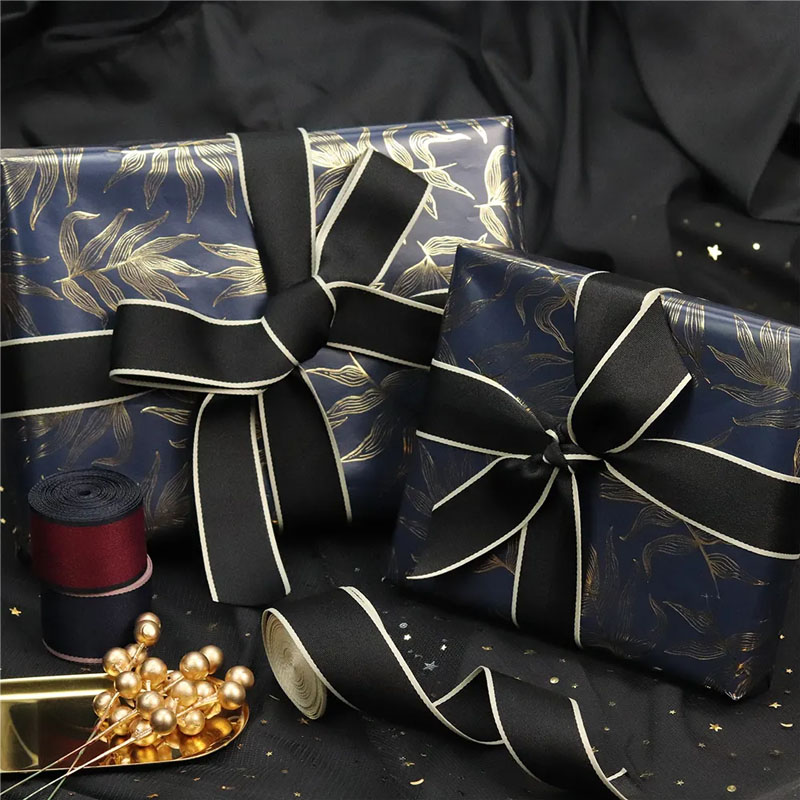
Check the Custom Bow Sample for Size, Color, Loop Defects, and Assembly Tolerance
Before moving to production, verify the custom ribbon bow specs with a physical sample or measurement record. This step makes the decision verifiable and prevents costly rework.
Custom Program Planning Checklist
- Specs: Confirm bow size (e.g., the approved tolerance diameter), ribbon width (e.g., the buyer-confirmed limit), material (e.g., grosgrain), and color (e.g., Pantone 186C).
- Cost & MOQ: Check that the sample matches the quoted price per unit and minimum order quantity (e.g., the quoted quantity).
- Production Risk: Inspect for defects like uneven loops, frayed edges, or color variation.
- Factory Execution: Ensure the sample meets your assembly tolerance (e.g., the buyer-approved tolerance) and packaging requirements.
- quote request/Sample Handoff: Attach the approved sample to the quote request with a sign-off form to lock in specs.
Use this checklist as a quote request checkpoint. Each row identifies the requirement and the proof needed to pass. For more on custom ribbon specs, visit wholesale ribbon families.
Keep a Sample Approval Form and Reorder Record for Each Bow Spec
Keep this record for every bow spec before bulk production. The table at the end of this section lists each checkpoint, its requirement, and how it is verified.
Supplier evidence to request
Verify that the supplier can execute your custom OEM and ODM ribbon manufacturing bow specs. Request a physical sample or measurement record. Confirm material type, color match, bow dimensions, and stitch quality. This step prevents production risk and ensures factory execution aligns with your quote request.
Sample approval evidence
Before moving to production, verify the custom ribbon bow specs with a physical sample or measurement record. This step covers cost or MOQ assumptions and production risk. Use a sample approval form to document pass/fail criteria and sign off.
Reorder control records
Establish reorder controls by documenting the approved sample specs and quote request handoff notes. This ensures consistent factory execution on repeat orders. Include a simple table for quick reference.
| Checkpoint | Requirement | Verification |
|---|---|---|
| Supplier proof | Material, color, dimensions | Physical sample |
| Sample approval | Pass/fail criteria | Approval form |
| Reorder control | Specs, RFQ notes | Documented record |
Use this decision asset to streamline quote request/sample handoff and reduce production risk. For more on custom ribbon specs, visit our OEM/ODM page.
Loom Type, Colorfastness Testing, and Packing Inspection for Ribbon Bows
- Does the supplier run ribbon-specific looms for bow-grade material? Bow-grade ribbon requires consistent tension and edge finish that general fabric looms cannot guarantee. Supplier lists dedicated ribbon looms and provides a loom-type spec sheet with the quote request. Inconsistent width or frayed edges cause bow rejection and program delays. Request a loom capability statement and a pre-production width-tolerance sample.
- How does the supplier verify colorfastness on dyed ribbon bows? Color bleeding ruins bow appearance and can stain packaging or garments. Supplier performs AATCC wash-fastness or crocking tests per batch and shares results. Approved sample color may shift in bulk production, leading to full-lot rejection. Ask for the test method and a passing certificate for your chosen dye class.
- What is the supplier's reorder control process for approved bow specs? Without locked specs, repeat orders drift from the original sample approval. Supplier archives approved sample, material code, and artwork version for every SKU. Reorders arrive with different material, width, or print registration, requiring re-approval. Confirm that the supplier tags each SKU with a revision number and sample photo.
- Does the supplier offer a physical sample matching the bow program's material, width, and print? A digital proof cannot confirm hand feel, stiffness, or bow-tying performance. Supplier cuts a physical sample made from the intended production material within the stated lead time. Approving a digital-only spec may yield a bulk bow that does not tie or hold shape. Order a pre-production sample and compare it against your bow-making jig or template.
- What inspection stage does the supplier apply before packing ribbon bows? Bows have multiple failure points: print registration, edge finish, color consistency, and tie-ability. Undetected defects reach your packing line, causing costly rework or customer returns. Request the QC checklist and a recent batch inspection report from the MEEDEE ribbon factory.
In conclusion
For ribbon bows: custom program planning checklist, the next procurement action is a written quote request and sample approval record, not only a preferred style or unit price. Before bulk production, settle the specification, the MOQ assumption, the artwork version, factory capability, the sample sign-off method, the QC checkpoint, the approval risk, and the quote follow-up.
MEEDEE’s custom-ribbon page gives two useful planning boundaries: a 3-100 millimetres overall ribbon width range and a 2-3 week standard production window after sample approval. Confirm the finished bow dimensions, assembly route, packing, and order-specific timing in the quote request.
Frequently Asked Questions
How should a b2b buyer plan custom order?
Shortlist suppliers by material, width, color, printing method, artwork version, packing, and quantity per SKU. Confirm the minimum order and standard production lead time—typically 2–3 weeks after sample approval—in the quotation. Verify supplier risk by requesting a physical sample and comparing it against your specification document before approving the program.
Which supplier proof should buyers request for ribbon bows?
Request a physical sample that matches your custom ribbon bow specs—material, width, color, printing method, and artwork version. Check that the sample aligns with the quote request inputs and document the approved specs for reorder controls. Compare the sample against your specification document to verify the supplier can execute your requirements, and confirm the minimum order and lead time in the sample approval process.
Which approvals must a buyer secure before a custom ribbon bow program starts?
Lock the approved sample specs, including material, width, color, printing method, artwork version, packing, and quantity per SKU. Document these in the quote request handoff to establish reorder controls and reduce production risk. Confirm the minimum order and standard production lead time—typically 2–3 weeks after sample approval—in the quotation, and verify that the supplier can execute your custom ribbon bow specs before moving to production.
quote request handoff: Send Specs for Review.
Editorial note
Prepared by the MEEDEE Ribbon Editorial Team and reviewed against current product, customization and sourcing information supplied by Meedee Ribbon Inc. Commercial terms such as MOQ, sampling and lead time should be confirmed for each specification.