 EN
EN  FR
FR  DE
DE  KO
KO  ES
ES  SV
SV  AR
AR  DA
DA  CS
CS  IT
IT  JA
JA  TR
TR  PT
PT  NL
NL  PL
PL  FI
FI Cotton ribbons: custom program planning needs a written specification before the buyer can plan custom artwork, dielines, samples, finishes, and production handoff; otherwise suppliers may quote different product and approval assumptions.
This guide maps cotton ribbons: custom program planning specifications and evidence to comparable sample requests and RFQ fields.
Direct answer: For cotton ribbons: custom program planning, align artwork files, dimensions, material and finish targets, a signed-off sample, packing instructions, and the bulk-production handoff in one controlled specification.
Approve Cotton Ribbon Finish, Artwork, and Samples as One Sequence
Each line should name the spec to confirm, the factory evidence that proves it, and the buyer’s next step before bulk production.
| Requirement | Factory control | Evidence to verify | Order risk | RFQ follow-up |
|---|---|---|---|---|
| Finish or surface effect | Factory must document the applied finish (e.g., matte, glazed, soft-hand) and confirm it matches the approved standard. | Compare the physical strike-off against the finish reference under buyer-approved viewing conditions; measure hand feel and gloss level. | Unspecified finish can cause rejection at final inspection, delaying shipment and incurring rework costs. | Request a finish-matching sample and include the finish code in the RFQ specification sheet. |
| Artwork or logo file | Factory checks file resolution, color mode (CMYK), and bleed margins before plate making. | Submit a pre-production digital proof and confirm all text, borders, and registration marks are legible at 1:1 scale. | Low-resolution or wrong-color-mode artwork leads to blurred printing and color mismatch, requiring re-plating. | Provide a high-resolution vector PDF with spot colors defined; ask for a digital proof before plate approval. |
| Sample approval | Factory holds production until the signed sample approval form is returned with any corrections noted. | Inspect the physical sample against the spec sheet: width, color, print alignment, finish, and edge finish. | Skipping sample approval risks bulk production with undetected defects, causing full-order rejection. | Approve the sample in writing within agreed response time; if rejected, specify the exact defect and request a revised sample. |
Read the rows as one approval sequence for this cotton ribbons custom order. Begin with the finish or surface effect row, then weigh the order-risk and RFQ follow-up columns to judge whether the proof returned so far is enough. Check each point against the inspection method and the evidence named in that same row.
Keep the supplier response, marked sample, and approval owner for cotton ribbons custom under the same revision number. When a proof disagrees with the approved record, put the quote, sample, and production release on hold until the factory answers the gap in writing. Before you sign off the checkpoint, line up the newest drawing, sample, quotation, and approval notes, decide which document wins if they clash, and write down how you resolved it. Move the signed requirement table into the purchase order and production handoff so the same checks carry through quoting, sample approval, shipment release, and reorder review.
When the order volume is large enough to justify lot-by-lot checks, compare the factory inspection record against the ISO 2859-1 sampling inspection standard before you accept the requirement.
Weigh Reorder, Variant, Custom Design, and Stock Cotton Ribbon
| Option | Best fit | Trade-off | Risk to avoid | Verification | Follow-up |
|---|---|---|---|---|---|
| Current specification reorder | Repeat orders using the same material, width, color, and artwork already approved. | No opportunity to update design or improve cost driver through material substitution. | Inadvertent specification drift if the original proof is not referenced for every reorder. | Compare the physical proof or signed sample against the new production lot before shipment. | Confirm the spec sheet matches the prior order and request a production sample if six months have passed. |
| Alternative specification variant | Testing a different width, color, or printing method while keeping the same base construction. | Requires a new sample approval cycle, adding time and cost for artwork setup and strike-off. | The alternative may not match the original color standard or may behave differently on the loom. | Request a physical strike-off on the exact cotton ribbon substrate and measure width tolerance. | Approve the strike-off in writing before any bulk production is scheduled. |
| Custom cotton ribbon design | Full custom program with proprietary colors, printed logos, or special finishing for brand identity. | Higher cost driver due to custom dyeing, engraving, and setup; longer lead time until sample approval. | Incomplete artwork or unapproved color standard can cause rework and delay the entire program. | Submit a digital proof and a hand-tied color card, then request a physical sample from the custom ribbon manufacturing run. | Sign off the approved sample and lock the reorder tolerances in the specification sheet. |
| Safer fallback stock ribbon | Immediate needs or low-volume trials where a standard color and width are acceptable. | Limited to available colors and widths; no custom printing or dye lot control. | Stock ribbon may not match the exact shade of previous custom runs or the brand color guide. | Request a stock color card and a physical sample under the same lighting used for your custom references. | Confirm inventory availability and lead time for the selected stock SKU before placing the order. |
Choosing the right route for your cotton ribbon program determines how much approval risk you carry. Each option requires a different level of specification lock and sample verification. The safer path is to document every decision parameter—material, width, color, and finish—before committing to a production run. Without that written baseline, a reorder can drift, a custom design can miss the mark, and a stock substitute can fail the brand standard.
When two routes quote similar prices, the decision usually turns on sign-off discipline rather than the sample itself. Skip a formal proof sign-off and the supplier has no written record of the approved tolerance, color, and finish; the failure shows up at final inspection as a rejected batch or a rework charge. Before you approve production, verify the physical sample against the agreed specification, confirm that artwork setup, dye-lot minimums, and finishing tolerances appear as line items in the RFQ, and record the MOQ, lead time, and unit price in the quotation so a later reorder is compared against the same facts.
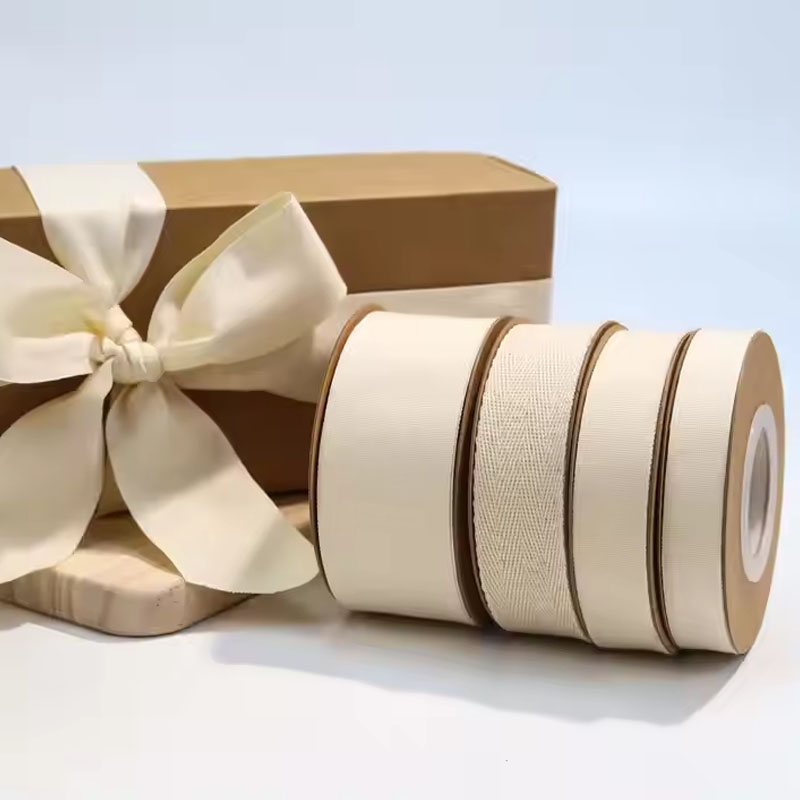
Check the Cotton Ribbon Proof for Width, Dye Lot, and Edge Finish
Before approving a custom cotton ribbon run, verify the physical proof against your spec sheet. Use this checklist to confirm factory execution and avoid production risk.
- Specs & Cost: Measure ribbon width, thread count, and dye lot against the quote request. Confirm any cost adjustments for non-standard widths.
- MOQ & Production Risk: Ensure the proof matches the agreed MOQ batch; a mismatch signals potential yield issues.
- Factory Execution: Check edge finish (fraying), colorfastness, and print registration. Reject if tolerances exceed the buyer-approved tolerance.
- quote request/Sample Handoff: Document the proof approval in writing, including date and sign-off, to lock the production spec.
For a structured review, use this table to flag discrepancies:
| Checkpoint | Pass/Fail | Notes |
|---|---|---|
| Width tolerance within the buyer-approved tolerance | ||
| Dye lot match | ||
| Edge finish (no fray) | ||
| Print alignment |
Once verified, the proof becomes the binding reference for bulk production. For more on custom ribbon specs, see wholesale ribbon families.
Track Cotton Ribbon Proof, Sample Approval, and Reorder Triggers
Supplier evidence to request
At the supplier proof checkpoint, the required output is a verified physical proof that matches your spec sheet. Compare the proof against your quote request specs for width, thread count, and color fastness. Use a standardized checklist to document pass/fail criteria before advancing to sample approval.
Sample approval evidence
Once the proof passes, move to sample approval. The output here is an approved sample with signed-off tolerances. Ensure the sample is cut from the same production batch as the proof to avoid later deviations. Record any adjustments to cost or minimum order that arise from sample revisions. This step reduces production risk by locking in factory execution parameters early.
Reorder control records
For reorder control, the checkpoint output is a reorder trigger document that specifies minimum reorder quantities, lead time buffers, and cost escalation clauses. This prevents stockouts or overcommitment. Link the reorder logic to your internal ERP system for automated alerts. The handoff from sample approval to reorder control should include a final quote request summary and sample archive reference.
| Checkpoint | Required Output | Key Action |
|---|---|---|
| Supplier proof | Verified physical proof | Compare against spec sheet |
| Sample approval | Approved sample with tolerances | Sign off and archive |
| Reorder control | Reorder trigger document | Link to ERP system |
By building this decision asset, you create a repeatable framework that reduces production risk and ensures consistent factory execution across all custom cotton ribbon orders. For more on custom ribbon specifications, visit OEM and ODM ribbon manufacturing.
Cotton-Specific Capability, Shrinkage Testing, and Tolerance Sign-Off
- Does the supplier have documented experience weaving cotton ribbons to your width, edge finish, and tensile strength? Cotton ribbon production requires specific loom setups and finishing processes that differ from polyester or satin. A supplier without documented cotton experience may produce inconsistent edges or shrinkage. The supplier provides a capability sheet listing cotton ribbon widths, edge types (cut, fused, or hemmed), and tensile strength ranges they have produced in the past twelve months. Approving a supplier without cotton-specific capability can lead to rejected rolls, rework costs, and delayed program launch. Request a written capability statement for cotton ribbons and compare it against your width and edge finish requirements before shortlisting.
- What verification method does the supplier use to confirm cotton ribbon color and shrinkage before bulk production? Cotton absorbs dye differently than synthetic fibers, and shrinkage can exceed acceptable tolerances if not pre-tested. A documented verification method protects your program from color mismatch or dimensional change after washing. The supplier performs a pre-production strike-off for color approval and a shrinkage test on a sample length from the same lot, with results recorded and shared before bulk cutting. Without a verification method, you may approve a color that shifts in bulk or a ribbon that shrinks below usable width after the first wash. Ask the supplier to describe their cotton-specific strike-off and shrinkage test process, and include the verification method as a line item in the quote request.
- What is the approval risk if the cotton ribbon sample is approved without a signed tolerance sheet for width and color? A signed tolerance sheet defines acceptable variation in width, color shade, and shrinkage. Without it, the supplier may deliver ribbon that meets their internal standard but fails your end-use requirement. The supplier provides a tolerance sheet that lists acceptable width deviation, color delta (e.g., buyer-approved color tolerance), and shrinkage percentage, and requires your signature before bulk production. Approving a sample without a signed tolerance sheet creates a dispute risk: you may reject a bulk run that the supplier considers within spec, causing delays and reorder costs. Draft a tolerance sheet for width, color, and shrinkage, and require the supplier to sign it before you approve the sample.
- What buyer follow-up is needed after the cotton ribbon sample is approved? Sample approval is a gate, not a finish line. Without a structured follow-up, the approved specification may not transfer correctly to the bulk production order, leading to errors in material, width, or color. The supplier issues a sample approval confirmation that lists the approved width, color code, edge finish, and shrinkage tolerance, and you receive a copy before the bulk order is placed. Skipping follow-up can result in a bulk run that uses a different cotton lot or dye batch, producing ribbon that does not match the approved sample. Send a written confirmation to the supplier listing all approved specifications and request a production-ready specification sheet before the bulk order is scheduled.
- How does the supplier ensure quality control for cotton ribbon during bulk production? Cotton ribbon can develop defects such as slubs, uneven dyeing, or edge fraying during weaving and finishing. A documented quality control plan helps you avoid receiving rolls that fail your end-use standard. The supplier performs in-line inspection during weaving, a final visual check under controlled lighting, and a random roll test for width, color, and tensile strength before shipment. Without a documented quality control plan, you may receive bulk ribbon with hidden defects that only appear during cutting or sewing, causing waste and production delays. Request the supplier's quality control plan for cotton ribbon, including inspection points and defect tolerance, and include it as a contract condition in the purchase order.
To prepare comparable quote request inputs for your cotton ribbon program, you must verify that each supplier can produce your exact width, edge finish, and tensile strength. The MEEDEE ribbon factory provides a capability sheet that lists these specifications, allowing you to compare suppliers on documented experience rather than general claims. This step prevents approving a supplier whose equipment or process cannot deliver your required cotton ribbon quality.
After you approve the sample, the next buyer action is to confirm the tolerance sheet and quality control plan in writing before the bulk order is placed. Without these documents, you risk receiving ribbon that does not match the approved sample in color, width, or shrinkage. Confirm all commercial numbers—minimum order, lead time, and pricing—in the written quote request to lock the program terms before production begins.
In conclusion
The final approval of your custom cotton ribbon program depends on how thoroughly you have checked each checkpoint: specification completeness, cost and minimum order alignment, lead time feasibility, and quality risk from proof through production. By comparing supplier responses against your documented asset—material type, width, color, printing method, artwork version, packing, and quantity per SKU—you can shortlist only those vendors who deliver a verified physical proof and signed sample approval. This structured handoff from quote request to sample approval ensures that reorder triggers are locked and repeatable, reducing the risk of costly specification drift.
For an initial feasibility check, MEEDEE’s custom-ribbon reference states a 3-100 millimetres overall width range and a 2-3 week standard production window after sample approval. The cotton weave, print method, packing, and order schedule still need written confirmation.
To request a quote for cotton ribbons custom, use cotton ribbons to confirm the final specification, quote assumptions, sample approval, QC evidence, approval risk, and supplier follow-up before bulk order.
Frequently Asked Questions
How should a B2B buyer plan a custom cotton ribbon order?
Only if you first document the full specification: material type, width, color, printing method, artwork version, packing, and quantity per SKU. Compare these parameters across shortlisted suppliers to understand how each affects cost and minimum order, then verify the lead time for standard production after sample approval, which typically ranges from 14 to 21 calendar days but may extend for custom printed or specially dyed programs. Request a physical proof or lab dip to check color accuracy and print alignment, and confirm the minimum order is negotiable based on your order schedule and combined SKUs.
Which supplier proof should buyers request for cotton ribbons?
Request a physical proof or strike-off that shows the exact cotton ribbon width, weave, color, and any printed design, along with a measurement report for shrinkage and colorfastness if applicable. Verify this proof against your specification document, then approve it as the binding reference for bulk production. For sample approval, check that the sample matches the proof and meets your QC criteria, and document any deviations before issuing the final approval. Ask the mill to state its cotton ribbon capability and name who owns the follow-up.
What should buyers lock before approving a custom cotton ribbon program?
Lock the approved physical proof, the signed sample approval, and the reorder trigger document that specifies the minimum quantity, lead time, and any volume breakpoints before approving a custom cotton ribbon program. Confirm the minimum order and lead time in the quotation, and verify that the supplier has the capacity to meet your schedule. Document all specifications and approvals to reduce risk in future reorders.
quote request handoff: Send Specs for Review.
Editorial note
Prepared by the MEEDEE Ribbon Editorial Team and reviewed against current product, customization and sourcing information supplied by Meedee Ribbon Inc. Commercial terms such as MOQ, sampling and lead time should be confirmed for each specification.