 EN
EN  FR
FR  DE
DE  KO
KO  ES
ES  SV
SV  AR
AR  DA
DA  CS
CS  IT
IT  JA
JA  TR
TR  PT
PT  NL
NL  PL
PL  FI
FI A pre-made bow looks like a ribbon product and prices like a labour product. The ribbon is a minority of the cost, and every requirement that touches the assembly sequence moves the number more than the material does.
This sets out the four variables that decide a bow or elastic loop price, the sample that proves a repeated operation rather than one good piece, and how to write quantity so three quotations become comparable.
You are not buying ribbon any more, you are buying assembly
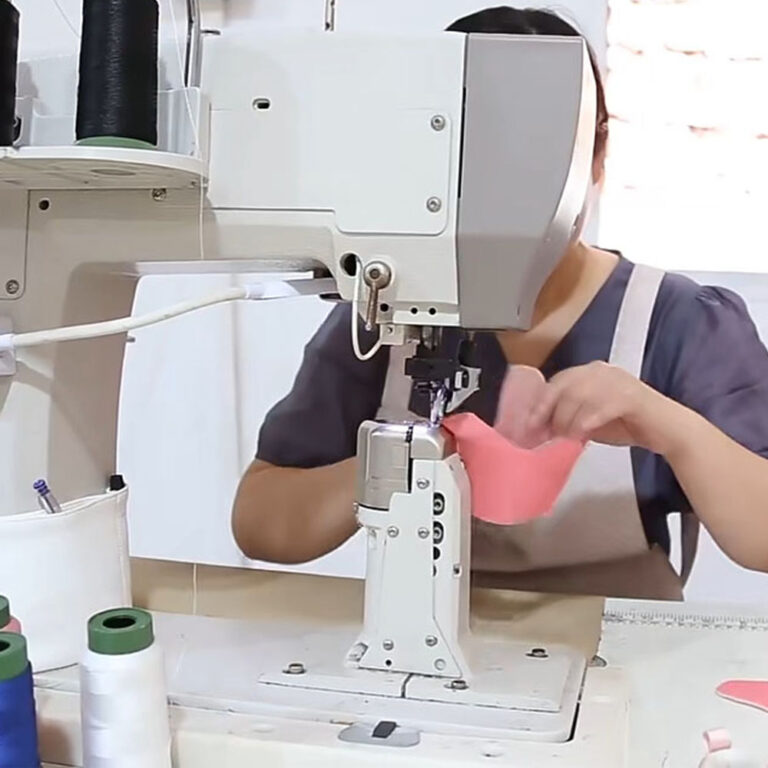
A pre-made bow and an elastic stretch loop look like ribbon products, and they price like labour products. The ribbon is a minority of the cost. What you are actually buying is a fixed sequence of hand and machine operations repeated tens of thousands of times, and every quotation variable that touches that sequence moves the number more than the material does.
This is why a bow quotation that arrives without questions is a warning sign. A supplier who has made the item knows which of your requirements is the expensive one and will ask about it.
The four things that decide a bow or loop price
None of the four is a material question, which is why a materials-led RFQ produces quotations that cannot be compared. Take them in order and the expensive one usually declares itself.
Operations per piece, not metres per order
Two programs with the same annual volume can differ by half on unit price purely because one runs in long consecutive batches per variant and the other switches design every few thousand pieces. Assembly lines pay for setup in minutes, not in metres, so the number that matters to a bow quotation is how many identical pieces run back to back.
Price a bow the way the factory builds it. Every loop is a handling operation, every tail is material plus a cut, and every attachment is a station somebody stands at. A design with six loops and a stitched centre is not marginally more expensive than one with three loops and a stapled centre; it is a different line. MEEDEE Ribbon runs 3-100 mm across nine ribbon families, so the ribbon feeding that line is a genuine variable too, and a narrower ribbon at the same loop count changes both material and handling.
| Variable | Why it costs | What to state in the RFQ |
|---|---|---|
| Loop count and tail length | Each loop is an operation; each tail is material plus a cut | Number of loops, finished width across the bow, tail length and cut style |
| How it is fixed | A stapled centre, a stitched centre, and a printed band are three different lines | The fixing method, or ask for the supplier’s recommendation with a reason |
| Attachment | Adhesive pad, elastic loop, twist tie, and clip each add a station | How the bow reaches the pack: by hand, by machine, or pre-attached |
| Presentation | Flat-packed bows are cheap and arrive crushed; shaped bows survive and cost more | Whether the bow must arrive shaped, and what the receiving side does with it |
Elastic adds a failure mode that shows up late
Elastic stretch loops sit at the same place in the cost structure but with an extra failure mode: the elastic has to hold its recovery after being stretched over the pack, sitting in a warehouse, and being shipped. A loop that fits perfectly at approval and is slack after eight weeks has failed, and it fails after you have paid.
The sample that proves a bow, and the one that does not
A single sample proves that the item can be made. It says nothing about whether it can be made forty thousand times to the same dimensions, which is the only question that matters once the purchase order is placed.
Approve a short run, not one good piece
A bow sample sent loose in a bag proves the bow. It does not prove the program, because the program is a repeated operation. The factory-side check worth insisting on is a pre-production sample drawn from a short run rather than made individually at the bench, released with an approval record naming ribbon material, width in millimetres, loop count, finished dimensions, fixing method, attachment, and the pack presentation.
- Ask for several pieces from the same short run and measure the spread, not the best one. Consistency is the whole product.
- For elastic loops, stretch a sample to its working position, hold it, release it, and measure recovery. Repeat after the sample has sat for a few weeks.
- Put one sample through your own packing motion. A bow that is fine in the hand and awkward on the line is a labour cost you will pay every day.
- Keep a signed-off sample on both sides and check the reorder against it rather than against the previous delivery.
Writing the RFQ so three quotations mean something
Assembly quotations diverge for structural reasons, not because one supplier is cheaper. Two inputs remove most of that divergence, and both cost nothing to supply.
State quantity per SKU, and the date you need goods
Quantity per SKU and the number of SKUs, not a total, because assembly cost per piece falls with run length per variant rather than with the order size. State colour approval on the actual ribbon, and give the date you need goods in the warehouse so the supplier can work backwards. Standard production is 2-4 weeks after sample approval, with custom printed or specially dyed programs confirmed separately in the quotation, and the minimum is confirmed against material, width, colour, printing method, artwork version, packing, quantity per SKU, and schedule.
See ribbon bows for the made-up range, wholesale ribbon families for the material behind them, custom ribbon manufacturing for customization routes, and OEM and ODM ribbon manufacturing for own-label programs.
RFQ checkpoint
Loop count, finished width, tail length, fixing method, attachment, presentation, and quantity per SKU. We will come back with the minimum those variables produce and flag the expensive one.
Conclusion
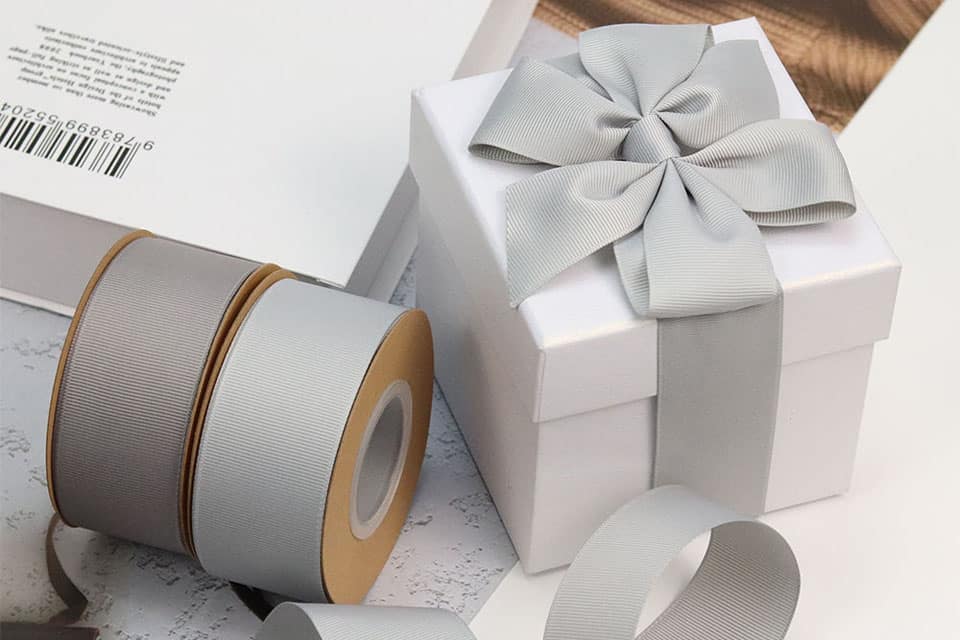
Bows and elastic loops are assembly programs wearing a ribbon’s clothes. Price them by the operation: loop count, fixing, attachment, and presentation, quoted against quantity per SKU. Then approve them on several pieces from a short run rather than on one good sample, and for elastic, measure recovery after the sample has aged rather than on the day it arrives.
Frequently asked questions
Why is a bow quoted per piece rather than per metre?
Because the ribbon is a minority of the cost. The price is driven by the number of operations per piece and how many identical pieces run consecutively, which is why quantity per SKU matters more than the order total.
How do I stop elastic loops going slack in the warehouse?
Test recovery on an aged sample, not a fresh one. Stretch to the working position, hold, release, measure, and repeat after the sample has sat for several weeks under normal storage conditions.
Can bows arrive already shaped instead of flat?
Yes, and it is worth deciding deliberately. Shaped bows survive transit better and cost more to pack and ship; flat-packed bows are cheaper and shift the shaping labour to your side.
Editorial note
Prepared by the MEEDEE Ribbon Editorial Team and reviewed against current product, customization and sourcing information supplied by Meedee Ribbon Inc. Commercial terms such as MOQ, sampling and lead time should be confirmed for each specification.